Why Homeowners Choose Real Wood Garage Doors
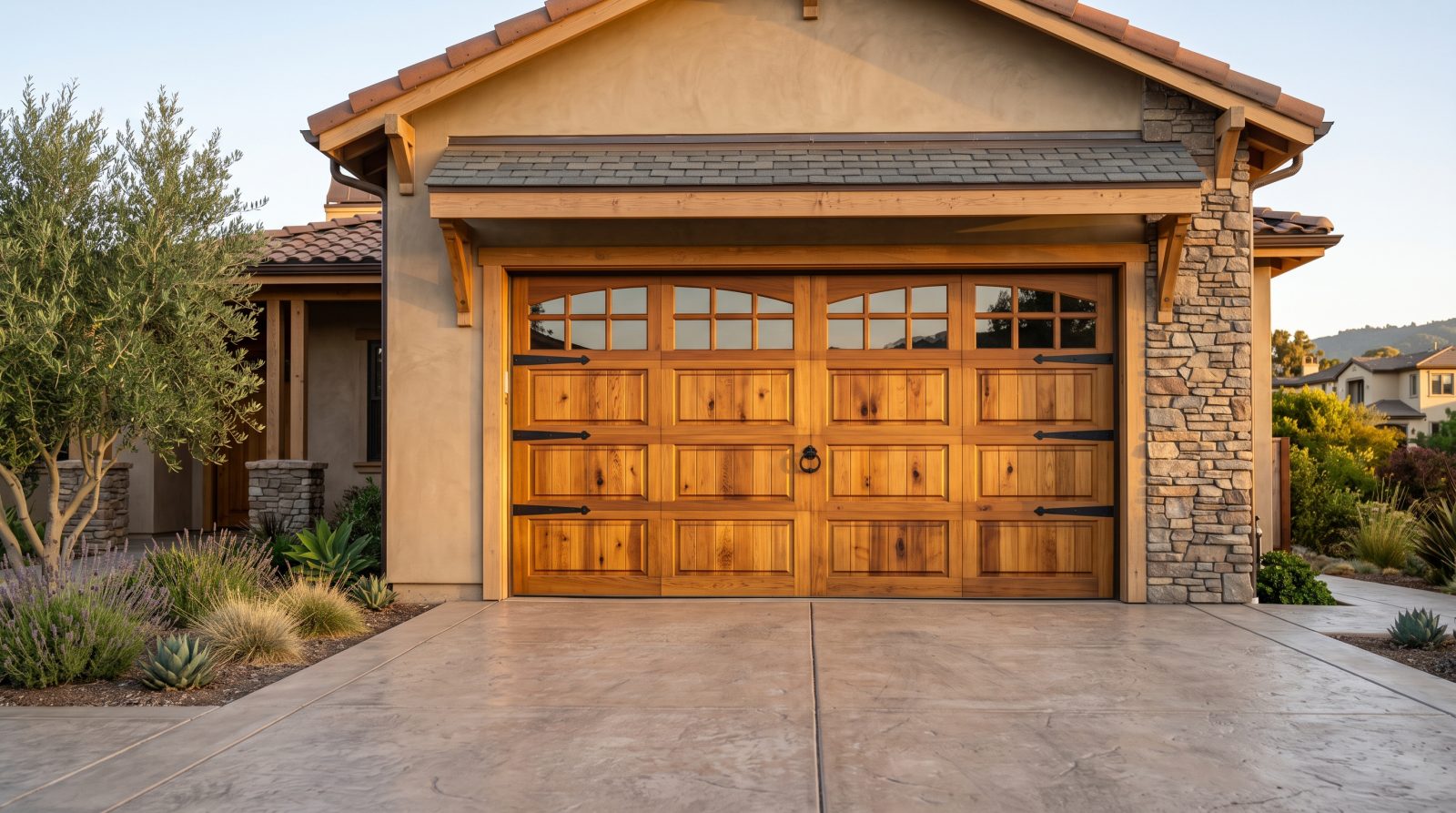
Real wood garage doors are chosen for one main reason: they look and feel like nothing else. A solid wood or wood-overlay door has depth, grain, and a hand-built quality that steel and composite doors approximate but rarely match. For a home with traditional, craftsman, Spanish, or high-end custom architecture, a wood door can be the single feature that ties the whole exterior together, which is why they remain a premium choice even though they ask more of the owner in upkeep.
Beyond looks, wood offers real flexibility. It can be built in carriage-house styles, stained to show off natural grain or painted any color, and crafted in custom sizes and panel designs that mass-produced doors do not offer. Species commonly used include cedar, redwood, mahogany, hemlock, and various hardwoods, each with its own grain, weight, and natural resistance to moisture. That craftsmanship comes at a price, both up front and over time, so a wood door is best understood as an investment you maintain rather than a fixture you install and forget.
It is also worth being clear-eyed about the trade-offs. Solid wood is heavier than steel, which puts more demand on the springs, cables, and opener that lift it every day. Wood reacts to weather, so it needs periodic refinishing and inspection that aluminum or steel doors do not. None of this makes wood a poor choice; it simply means a wood door rewards an owner who is willing to keep up with it, and the payoff is a door that can look stunning for many years.
How Wood Doors Behave by Climate and Region
Because wood absorbs and releases moisture, the climate where you live shapes almost everything about how a wood garage door ages and how often it needs attention. There is no single maintenance schedule that fits the whole country, so it helps to think about your own conditions honestly rather than following a generic rule.
In hot, sunny, and dry regions, the enemy is usually the sun and heat. Intense ultraviolet light fades stain and breaks down finish faster, and repeated heat cycles can dry wood out, leading to cracking, splitting, and shrinking over time. South- and west-facing doors take the worst of it. In humid and coastal areas, the concern flips to moisture and salt air, which encourage swelling, finish failure, and, over the long term, rot if water is allowed to sit in joints or along the bottom of the door. In cold, snowy climates, freeze-thaw cycles and road salt are hard on both the wood and the metal hardware, and a door that swells with winter moisture can bind in its frame or feel heavier to lift.
The practical takeaway is that the same wood door may need refinishing every few years in a brutal sun-and-heat climate and noticeably less often in a mild, sheltered one. Pay attention to your specific door rather than the calendar: if water no longer beads on the surface, if the finish looks chalky or faded, or if you see graying or raised grain, the finish is telling you it is time, regardless of how long it has been.
- Hot and dry: watch for UV fading, drying, cracking, and splitting, especially on sun-facing doors.
- Humid and coastal: watch for swelling, finish breakdown, and rot in joints or along the bottom edge.
- Cold and snowy: watch for swelling that makes the door bind, plus salt and moisture wear on hardware.
- Mild and sheltered: generally the easiest on wood, but never assume zero maintenance.
Maintaining a Wood Garage Door So It Lasts
Good wood-door maintenance is really two jobs working together: protecting the wood itself and keeping the moving hardware that lifts it in safe condition. Neglecting either one shortens the life of the door, and the second one is where a cosmetic problem can quietly become a safety problem.
On the wood side, the most important habit is keeping a sound finish on every surface, including the top and bottom edges, which are often missed and are exactly where water gets in. A protective stain or paint with UV resistance is what stands between the wood and the weather. Refinishing on time, before the old coating fails completely, is far easier and cheaper than stripping and rebuilding a finish that has already let moisture into the wood. Keep the door clean of dirt and pollen, rinse off salt or coastal residue, and address any chips or cracks promptly so water cannot seep into the grain.
On the hardware side, wood doors deserve the same care any door needs, and arguably more because of their weight. That means periodically tightening loose hardware, lubricating rollers, hinges, and springs with a proper garage-door lubricant rather than a general spray that attracts grit, and looking over the cables and springs for visible wear. It also means testing the door's balance and the opener's auto-reverse safety feature. Springs and cables are under extreme tension and are not a safe do-it-yourself project, so inspection is something to do with your eyes, not your hands. If anything looks frayed, gapped, or stretched, stop and have a trained technician look at it.
- Keep a UV-resistant finish on all surfaces, including the easily-forgotten top and bottom edges.
- Refinish before the old coating fully fails, not after water has already gotten into the wood.
- Clean off dirt, pollen, salt, and coastal residue, and seal small chips and cracks promptly.
- Lubricate rollers, hinges, and springs with proper garage-door lubricant, never a thin general-purpose spray.
- Visually check cables and springs for wear, but never attempt to adjust or release them yourself.
Common Wood-Door Problems and the Warning Signs
Wood doors fail in a few predictable ways, and most of them give you warning if you know what to look for. Catching these early is the difference between a planned repair and a door that traps your car or hangs open as a security risk.
The most wood-specific problem is warping and swelling. When moisture gets into wood unevenly, panels can bow, twist, or swell, and a warped door may rub the frame, sit unevenly, or refuse to seal at the bottom. A door that suddenly drags, binds, or will not close flush after a wet or humid stretch is often telling you the wood has moved. Rot is the longer-term version of the same story, usually starting at the bottom of the door or in joints where water collects; soft, dark, or crumbling wood there is a sign the structure itself is weakening. Finish failure, such as peeling, cracking, graying, or chalky surfaces, is the early signal that the wood is being left exposed.
Then there are the failures that have nothing to do with the wood being wood and everything to do with the door being heavy. A solid wood door puts real load on its springs, cables, and opener. Signs of trouble include the door suddenly feeling far heavier or refusing to lift more than a few inches, a loud bang from the garage when nothing was being touched, a visible gap in a coiled spring, the door slamming down faster than normal, or the opener straining and reversing because it cannot lift the weight. A door that looks crooked, sags on one side, grinds as it moves, or comes off its track is in an unsafe state. These are not cosmetic issues and they are not safe to keep operating.
- Warping or swelling: the door rubs, binds, sits unevenly, or will not seal at the bottom.
- Rot: soft, dark, or crumbling wood, usually at the bottom edge or in joints.
- Finish failure: peeling, cracking, graying, or chalky surfaces that leave wood exposed.
- Spring or cable failure: sudden heaviness, a loud bang, a gap in the spring, or the opener straining.
- Off-track or sagging: a crooked or grinding door that is unsafe to keep running.
When a Wood Door Becomes Urgent: What to Do Right Now
Because this is where most people actually need help, it is worth separating the calm maintenance projects from the moments that need fast attention. A wood door can fail suddenly, and when it does, the right first move is almost always to stop using it rather than to force it.
If your door is stuck closed and your car is trapped inside, do not repeatedly hit the opener or try to muscle the door up. A broken spring, snapped cable, or warped panel that is binding can make the door dangerously heavy or cause it to fall, and forcing it can turn a part replacement into a much larger repair. If your door is stuck open and will not come down, treat it as a security and safety concern: an open garage exposes your home and anything in it, and a door hanging in a partly-open position can drop unexpectedly. In both cases, keep people and pets clear of the door and out from under it, and avoid parking beneath a door that is not behaving normally.
The safest path is to stop operating the door, note exactly what you are seeing, whether it is a loud bang, a visible broken spring, a door off its track, a panel that is binding, or a door that simply will not move, and reach out for help so a technician can advise on the safest next step before anything is forced. Wood doors are heavy and run on high-tension hardware, so calm, fast action beats a forced fix every time. Same-day help is often available for these situations, and describing the problem clearly helps get you the right response quickly.
- Car trapped inside: stop pressing the opener and do not force the door; the springs may be the problem.
- Door stuck open: treat it as a security risk, keep clear of it, and get help bringing it down safely.
- Heard a loud bang or see a gap in the spring: stop using the door entirely until it is inspected.
- Door is off track, crooked, or grinding: do not run it, and do not park under it.
- Never attempt to adjust or release springs and cables yourself; they store dangerous energy.
Repair, Refinish, or Replace a Wood Door
When a wood door has a problem, owners usually face one of three decisions, and the right one depends on the condition of the wood, the nature of the failure, and how the cost compares to the value of the door. The good news is that wood is often repairable in ways other materials are not, which is part of its long-term appeal.
Refinishing makes sense when the wood is sound but the surface has worn: faded color, a chalky or peeling finish, or minor surface checking. This is maintenance, not repair, and staying ahead of it protects the door. Repair makes sense when a specific part has failed but the door itself is in good shape, for example replacing broken springs, cables, rollers, or an opener, or addressing a single damaged section. Because the wood is durable and often custom, repairing rather than replacing a quality wood door is frequently the sensible long-term choice.
Replacement deserves real consideration when the wood has significant rot, when warping is severe enough that the door no longer seals or operates correctly, when multiple panels are damaged, or when repair costs start approaching the price of a comparable new door. A trustworthy technician should walk you through both paths honestly, based on safety and long-term value rather than pressure. Costs for parts like springs, cables, refinishing, or full replacement vary widely by door size, wood species, hardware, and your region, so any figure you see should be treated as a typical industry estimate rather than a quote; the only reliable number comes from someone assessing your actual door. If you want a clear read on whether yours should be refinished, repaired, or replaced, request a free quote and describe what you are seeing.