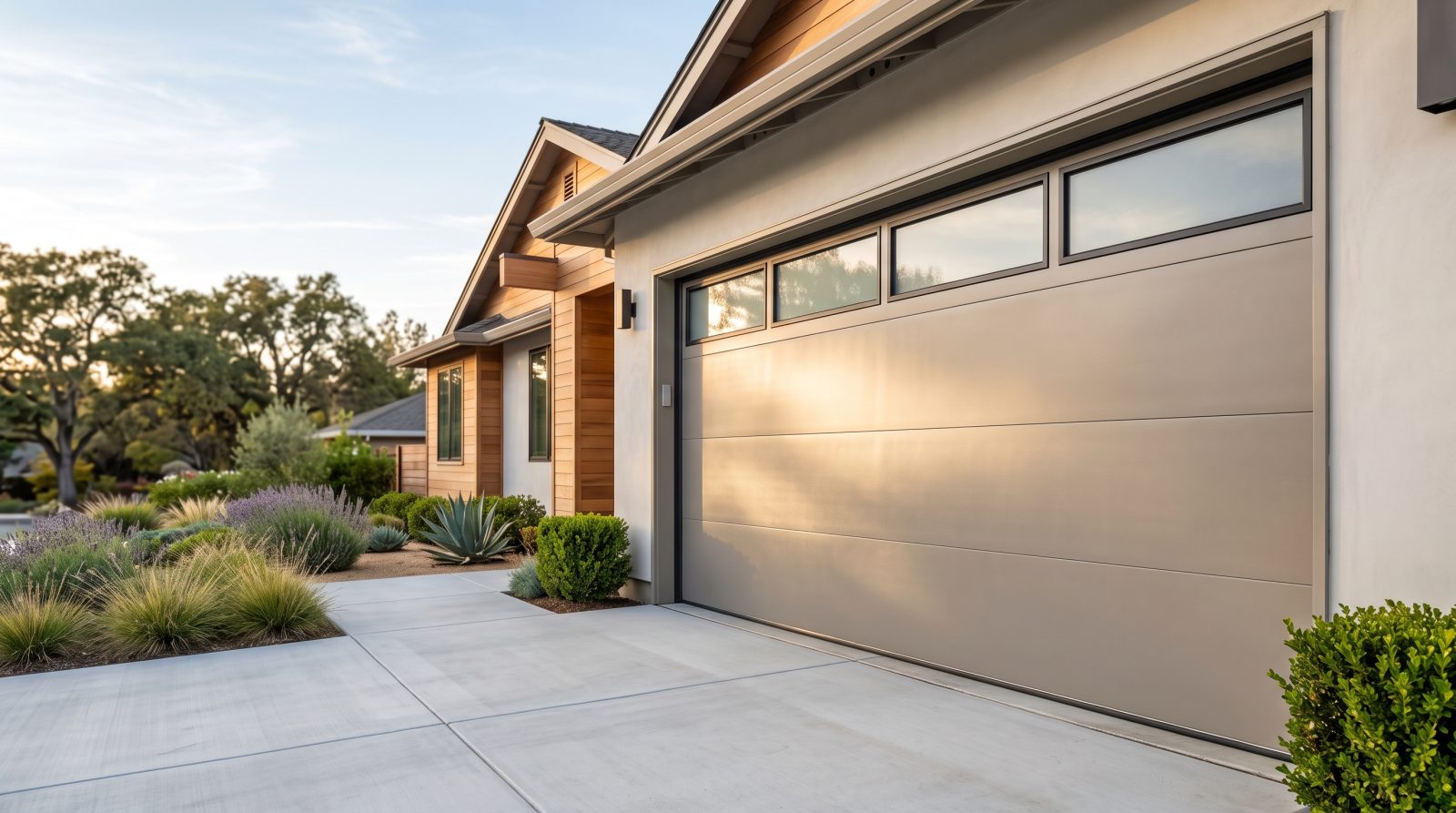
Typical garage door replacement cost ranges (installed)
For most homeowners, a new single-car garage door installed lands in the roughly $750 to $2,000 range, and a standard two-car (double) door installed typically runs about $1,200 to $4,000. The wide spread is normal: a basic non-insulated steel door at the low end and an insulated, well-built, or upgraded design at the high end are genuinely different products. Premium materials, custom sizes, glass sections, and decorative carriage-house styling can push a double door well past $4,000, sometimes into the $5,000 to $10,000+ territory for solid wood or fully custom builds. All of these are typical industry estimates that vary by door, material, region, and the condition of your existing opening.
It helps to think of the price in two parts: the door package and the labor. The door, hardware, springs, tracks, and rollers make up the bulk of the materials. Professional installation — removing and hauling away the old door, mounting and balancing the new one, and sizing the spring system to the door's weight — commonly adds a few hundred dollars and is where a lot of the long-term safety lives. A door that's hung level and balanced correctly lasts longer and is far less likely to leave you stuck with a door jammed open or closed down the road.
If your opener still works and is compatible, you can often keep it and replace only the door, which keeps the project on the lower end. If the opener is old, underpowered for a heavier insulated door, or failing, adding a new opener is a separate line item — typically a few hundred dollars more installed — and it's worth pricing both at once so you're not paying for two trips.
- Single-car door, installed: ~$750–$2,000 (estimate, varies by material and insulation)
- Double-car door, installed: ~$1,200–$4,000 (estimate; custom/solid-wood can exceed this)
- New opener, if needed: typically a few hundred dollars more installed
- Old-door removal and disposal: often bundled into install labor — confirm it's included
What actually drives the price up or down
Material is the single biggest lever. Steel is the most common and the best value — durable, low-maintenance, and available across the full price range depending on gauge (thickness) and how many layers it has. Aluminum and full-view glass-and-aluminum doors are lighter and modern-looking but usually cost more. Solid wood and wood-composite doors carry the highest prices and need periodic refinishing, while fiberglass and vinyl sit in the middle and resist dents and corrosion well.
Insulation is the next big factor, and it's not just about comfort. Doors are sold as single-layer (no insulation), double-layer (steel with a foam or polystyrene core), or triple-layer (steel-insulation-steel), and the R-value climbs with each step — along with the price. An insulated door also matters mechanically: it's heavier and quieter, and it holds up better against warping in temperature extremes. Size, of course, scales cost directly — taller and wider openings, and non-standard custom dimensions, mean more material and more labor.
Finally, the condition of your existing setup affects the bill. If the track, framing, or header is damaged, rotted, or out of square, that has to be corrected before the new door goes in. Add-ons like windows, decorative hardware, smart-opener integration, and upgraded weather sealing each add to the total. None of these are upsells if you actually want them — but knowing what each line costs lets you decide where to spend and where to save.
- Material: steel (best value) → aluminum/glass → fiberglass/vinyl → solid wood (priciest)
- Insulation level: single-layer vs double- vs triple-layer (higher R-value = higher cost)
- Size and custom dimensions: standard double doors cost less per square foot than odd sizes
- Windows, glass panels, and carriage-house or custom styling
- Condition of existing track, framing, and header (repairs add to the job)
- Whether you also need a new opener or upgraded springs
How cost and the right door vary by region and climate
Garage door pricing isn't uniform across the country, and the differences are real rather than marketing. Labor rates track the local cost of living, so installation in a major coastal metro generally costs more than in a smaller inland town for the very same door. Material availability and shipping for custom or specialty doors can also nudge prices in either direction depending on where you live.
Climate should shape the door you choose, not just the price you pay. In hot, sun-baked regions, single-layer steel doors and dark colors can warp or fade faster, so an insulated door and a fade-resistant finish often pay off. In cold-winter climates, an insulated (double- or triple-layer) door helps keep an attached garage — and the rooms above or beside it — from becoming a heat sink, which matters most if your garage shares walls with living space. In coastal and high-humidity areas, salt air and moisture punish bare steel; rust-resistant finishes, aluminum, fiberglass, or vinyl tend to last longer there.
Wind also matters. Hurricane-prone and high-wind coastal regions often require wind-rated (impact-rated) doors with reinforcement, which cost more but are frequently mandated by local building code. If you're in one of these areas, ask specifically whether a wind-rated door is required for your address — it's a code and safety question, not an optional upgrade, and skipping it can fail inspection.
- Hot/sunny: insulated doors and fade-resistant finishes resist warping and color loss
- Cold winters: insulation pays off most when the garage is attached or has living space nearby
- Coastal/humid: rust-resistant finishes, aluminum, fiberglass, or vinyl outlast bare steel
- High-wind/hurricane zones: wind-rated doors may be required by local code — always ask
Replace or repair? When a new door is the smarter spend
Not every garage door problem means replacement. A broken spring, a snapped cable, a door knocked off its track, or a failing opener are individual repairs — often a fraction of replacement cost — and a sound door is usually worth fixing rather than scrapping. Because this is the urgent stuff, the right move when a spring snaps or a door jams half-open is to stop using it and get same-day help, not to immediately price a whole new door.
Replacement starts to make sense when the door itself is the problem: panels that are dented in, cracked, rotted, or rusting through; a door that's badly out of balance and straining everything attached to it; or a door old enough that it predates modern safety features like the auto-reverse function and photo-eye sensors that stop a door on anything in its path. If you're facing repeated, escalating repairs on an aging door, the repair money is often better put toward a new, safer, more efficient door that won't keep failing.
Safety is the deciding factor more often than people expect. A garage door is the largest and heaviest moving object in most homes, and its springs are under extreme tension. A door that's stuck open is a security and exposure risk; a door stuck closed can trap your vehicle when you need it. Forcing a door that's binding, off-track, or spring-damaged can cause injury or turn a repair into a full replacement. When the simple checks don't restore safe, smooth operation, have a qualified garage-door technician assess balance and hardware before deciding — and if the verdict is replacement, you'll already know the ranges above.
- Repair (often the right call): broken spring, snapped cable, off-track door, opener failure
- Replace: dented/cracked/rotted/rusted panels, chronic imbalance, repeated escalating repairs
- Strongly consider replacing: doors that predate auto-reverse and photo-eye safety sensors
- Never force a binding, off-track, or spring-damaged door — get it assessed first
How to read a quote and avoid overpaying
A good estimate is itemized and specific. It should name the door's material and insulation type (single-, double-, or triple-layer), the exact size, the spring system being installed, and whether old-door removal, disposal, and a new opener are included. Vague one-line bids are where costs quietly balloon, because it's hard to tell what's actually in the price. Ask each company to break it out the same way so you're comparing identical scope, not just a bottom-line number.
Get more than one written estimate, and be cautious of a bid that comes in far below the others — it usually means something was left out, a thinner-gauge door was substituted, or the spring system is undersized for the door's weight. The springs matter enormously: they should be sized to the specific door, because undersized springs wear out fast and lead to exactly the kind of failures (doors that won't lift, premature breakage) that strand you. Spending a little more on a properly balanced, correctly sprung installation is cheaper than replacing parts again in a year.
Finally, match the door to your real needs rather than the most expensive option on the showroom floor. If your garage is detached and unheated, you may not need top-tier insulation. If it's attached with a room above, insulation and a quiet, well-balanced door are worth it. Decide your must-haves and your nice-to-haves before you shop, and you'll spend where it counts. When you're ready for an exact, no-guesswork number for your door and opening, request a free quote and have a technician confirm the right door and spring sizing for your home.
- Insist on itemized quotes: material, insulation layer, size, spring system, removal, opener
- Get multiple written estimates for identical scope before deciding
- Treat a far-below-the-rest bid as a warning sign, not a deal
- Confirm springs are sized to your specific door — undersized springs fail early
- Buy the insulation and features you'll actually use, not the priciest by default