What an aluminum-and-glass garage door actually is
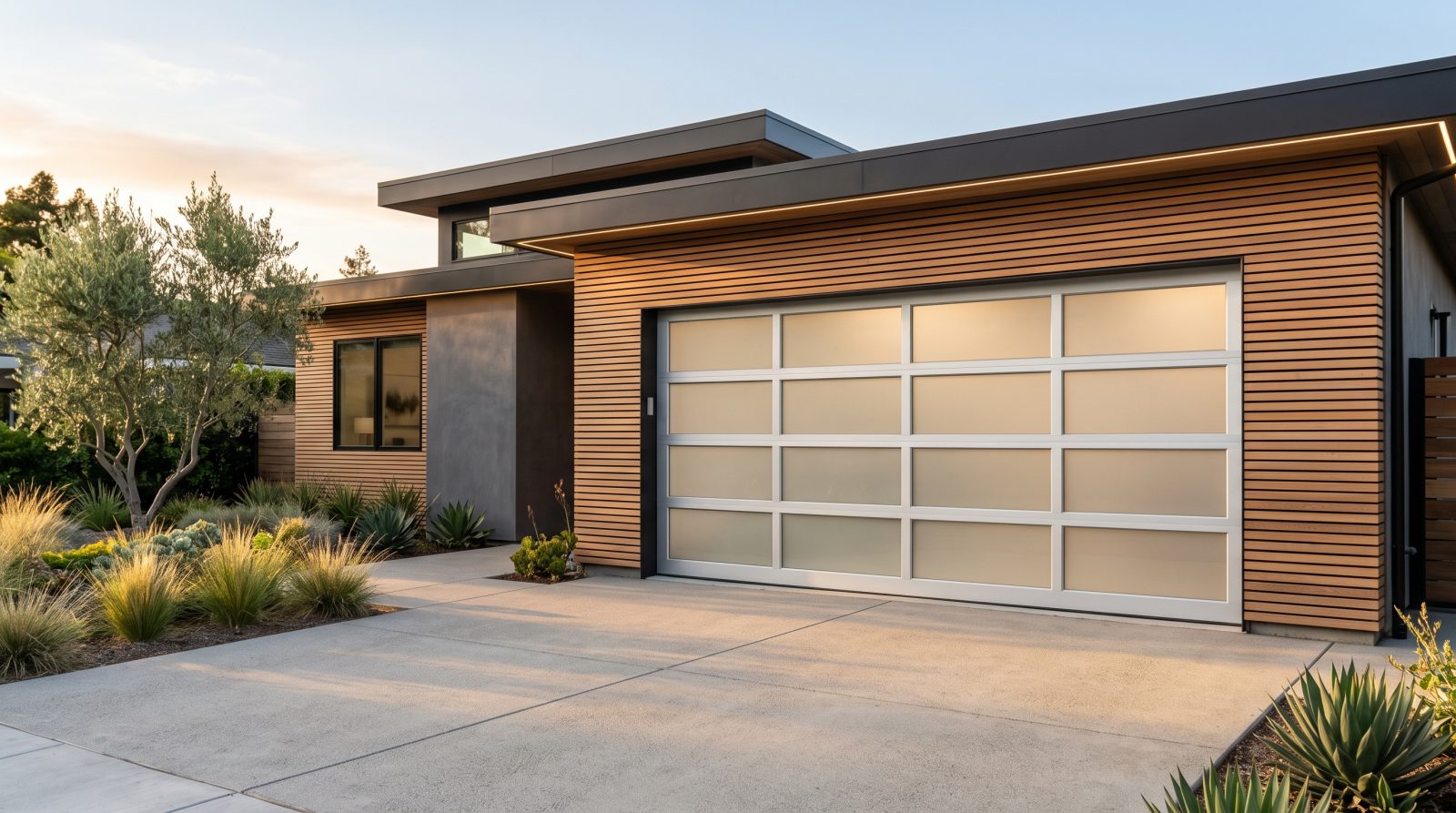
The term covers a family of doors built around an extruded aluminum frame infilled with glass or, in some cases, acrylic and polycarbonate panels. The frame is usually anodized or powder-coated aluminum in a finish like black, bronze, white, or a clear satin, and the glazing ranges from fully transparent to frosted, tinted, mirrored, or obscure 'satin' glass for privacy. Because the structure is a grid of slim rails and stiles rather than a single stamped sheet, the look reads as architectural and contemporary, which is why builders pair it with mid-century, modern, and 'industrial' style homes.
Mechanically, it is still a sectional overhead door. It is made of several horizontal sections hinged together, riding in vertical and horizontal tracks on rollers, and counterbalanced by a spring system so the opener, or your arm, only has to move a fraction of the real weight. The big difference is the materials. Aluminum is far lighter than steel, and glass adds rigidity in some directions while being brittle in others. That combination changes how the door should be balanced, how it tolerates impact, and how it behaves when one component fails.
- Frame: extruded aluminum, typically anodized or powder-coated for weather and color durability
- Glazing options: clear, tinted, frosted/satin, mirrored, or obscure glass; some lines use acrylic or polycarbonate for lighter weight and higher break resistance
- Glass safety grades: tempered (breaks into small pebbles) and laminated (holds together like a windshield) are the common safe choices for overhead use
- Operation: standard sectional overhead mechanism with springs, cables, rollers, and tracks, just lighter framing
- Best-fit homes: modern, contemporary, and light-focused spaces, garages converted to studios, gyms, or indoor-outdoor rooms
Strengths, trade-offs, and what to expect over time
The headline advantages are light transmission and corrosion resistance. Aluminum does not rust the way steel can, so these doors are a common recommendation in humid and salt-air coastal regions where a steel door's finish and edges can corrode over the years. The reduced weight also puts less strain on the opener and spring system, and the framed-glass construction resists denting from minor knocks better than a thin steel skin.
The trade-offs are real and worth understanding before you buy. Standard single-pane glass offers very little insulation, so a basic aluminum-and-glass door is not the right choice for a garage you heat or cool, or for a room behind it, unless you upgrade to insulated or double-pane glazing. Clear glass also means anyone can see inside, so privacy glazing or interior treatments matter if you store valuables. Aluminum framing is softer than steel and can bend on a hard impact, and glass, of course, can crack or shatter. Over time, expect to keep the rollers and hinges lubricated, watch for finish wear on lower-cost frames, and have the spring balance checked periodically since the lighter door still relies entirely on correctly tuned springs to operate safely.
- Pros: maximum daylight, rust resistance, lighter load on the opener, modern curb appeal, dent resistance vs. thin steel
- Cons: low insulation unless upgraded glazing is specified, less privacy with clear glass, frame can bend on impact, glass can crack or shatter
- Maintenance reality: periodic lubrication of rollers and hinges, finish care, and a professional balance check so the springs keep doing the heavy lifting
- Security note: glazed panels are visually open; consider obscure/frosted glass or laminated glazing for both privacy and harder-to-breach panels
How they perform by region and climate
Because this is a nationwide concern, the right specification depends heavily on where you live, and honest guidance varies by climate rather than by brand. In hot, sunny regions, solar heat gain through large glass panels can turn a garage into an oven, so tinted, low-E, or insulated glazing and a lighter frame color help manage temperature. In coastal and high-humidity areas, aluminum's corrosion resistance is a genuine advantage over steel, though the rollers, springs, cables, and hardware are still typically steel and need attention because salt air does not spare them.
In cold and snowy climates, two issues dominate. First, single-pane glass conducts cold readily and can develop condensation or interior frost, so insulated or double-pane glazing is strongly worth considering if comfort matters. Second, and this is where these doors intersect with urgent service calls, a garage door can freeze to the slab when meltwater or slush refreezes at the bottom seal overnight. In high-wind and storm-prone regions, ask specifically about wind-load ratings and laminated or impact-rated glass, since large glazed areas are more vulnerable to flying debris than a solid panel. None of these factors make aluminum-and-glass a bad choice anywhere, but they change which glazing and hardware you should specify.
- Hot/sunny regions: prioritize tinted, low-E, or insulated glass and lighter frame finishes to limit heat gain
- Coastal/humid regions: aluminum frame resists corrosion, but keep steel springs, cables, and rollers maintained against salt air
- Cold/snowy regions: insulated or double-pane glazing reduces frost and condensation; bottom seals are prone to freezing to the floor
- High-wind/storm regions: ask about wind-load ratings and laminated or impact-rated glass for large glazed areas
Urgent failures: what goes wrong and how to stay safe
This is the part that matters most when you are standing in your driveway and the door will not move. Aluminum-and-glass doors fail in the same core ways every overhead door does, plus a few of their own. The most serious is a broken torsion or extension spring. The spring stores enormous energy to counterbalance the door, and when it snaps you may hear a loud bang and then find the door extremely heavy, crooked, or stuck closed with your car trapped inside. Do not try to force it open with the opener or by hand, even though the door is light, because a door with a failed spring is no longer balanced and can drop suddenly.
Other common urgent problems include a door stuck partway and leaning because it has come off track, a snapped lifting cable that leaves one side hanging low, a cracked or shattered glass panel from impact or stress, and a door frozen to the slab in winter. A door stuck open is a security and weather exposure problem; a door stuck closed can trap your vehicle when you need to leave. In every one of these cases the safe response is the same: stop operating the door, keep people and pets away from underneath it, and do not stand or reach beneath a partially raised door. If glass is cracked, treat the panel as fragile and avoid pressing or slamming it, since tempered glass can let go all at once. These are same-day, get-help situations, not force-it-and-hope situations.
If you must act, you can usually disengage the opener using the emergency release cord, but only do this when the door is fully closed, never when it is raised, because a door with a broken spring or cable can come down hard once the opener no longer holds it. When in doubt, leave it where it is and request help. A trained technician can secure the spring system, realign the track, and replace a damaged panel far more safely than improvising at home.
- Broken spring: loud bang, suddenly heavy or crooked door, often stuck closed. Stop using it. Do not force it, even on a light door
- Off-track or leaning door: keep clear, do not operate, the rollers can release further
- Snapped cable: one side hangs low or the door is uneven. Treat it as unstable
- Cracked or shattered glass: avoid pressure or slamming; tempered glass can break all at once into pebbles
- Frozen to the slab: do not hammer the opener button; forcing it can strip the opener or bend the light aluminum frame
- Emergency release: only disengage the opener when the door is fully closed, never when raised
Cost ranges, lifespan, and getting a fair quote
Pricing for aluminum-and-glass doors varies widely, and any figure here is a typical industry range, an estimate that depends on door size, frame quality, glazing type, finish, insulation, hardware, and your region, not a quote. As a rough orientation, a basic single-car aluminum-and-glass door tends to fall on the higher end of the residential door market because of the framing and glazing, and full-view designer doors with premium glass and finishes can run substantially more. Insulated or laminated glazing, custom colors, larger or double-wide openings, and high wind-load specifications all push the price up. Professional installation is usually billed separately and reflects the care these doors require to hang and balance correctly.
On the repair side, the cost depends entirely on the part. A spring replacement, a cable repair, roller or hinge service, track realignment, or replacing a single cracked glass panel are all common line items, and a reputable company will give you a clear price range up front before any work begins and explain what is wrong and why. A well-installed, well-maintained aluminum-and-glass door can last many years; the frame and finish are durable, and most service over its life is routine spring, cable, roller, and seal maintenance rather than full replacement. When you are comparing options, ask about the glass safety rating, the insulation value if comfort matters, the warranty terms, and whether the springs are rated for the door's actual cycle life. If your door is currently failing and you need a real number for your specific door, the honest answer is that it requires an inspection, request a free quote and have a technician assess it in person.
- Treat all figures as typical ranges that vary by size, glazing, finish, insulation, hardware, and region, never a fixed quote
- Cost drivers up: insulated/laminated glass, custom finishes, larger or double openings, high wind-load ratings, full-view designer styles
- Common repairs: spring replacement, cable repair, roller/hinge service, track realignment, single-panel glass replacement
- Questions to ask: glass safety grade, insulation value, warranty terms, and spring cycle rating
- For an exact number on your door, an in-person inspection is the only honest way to quote it