What makes a garage door look modern?
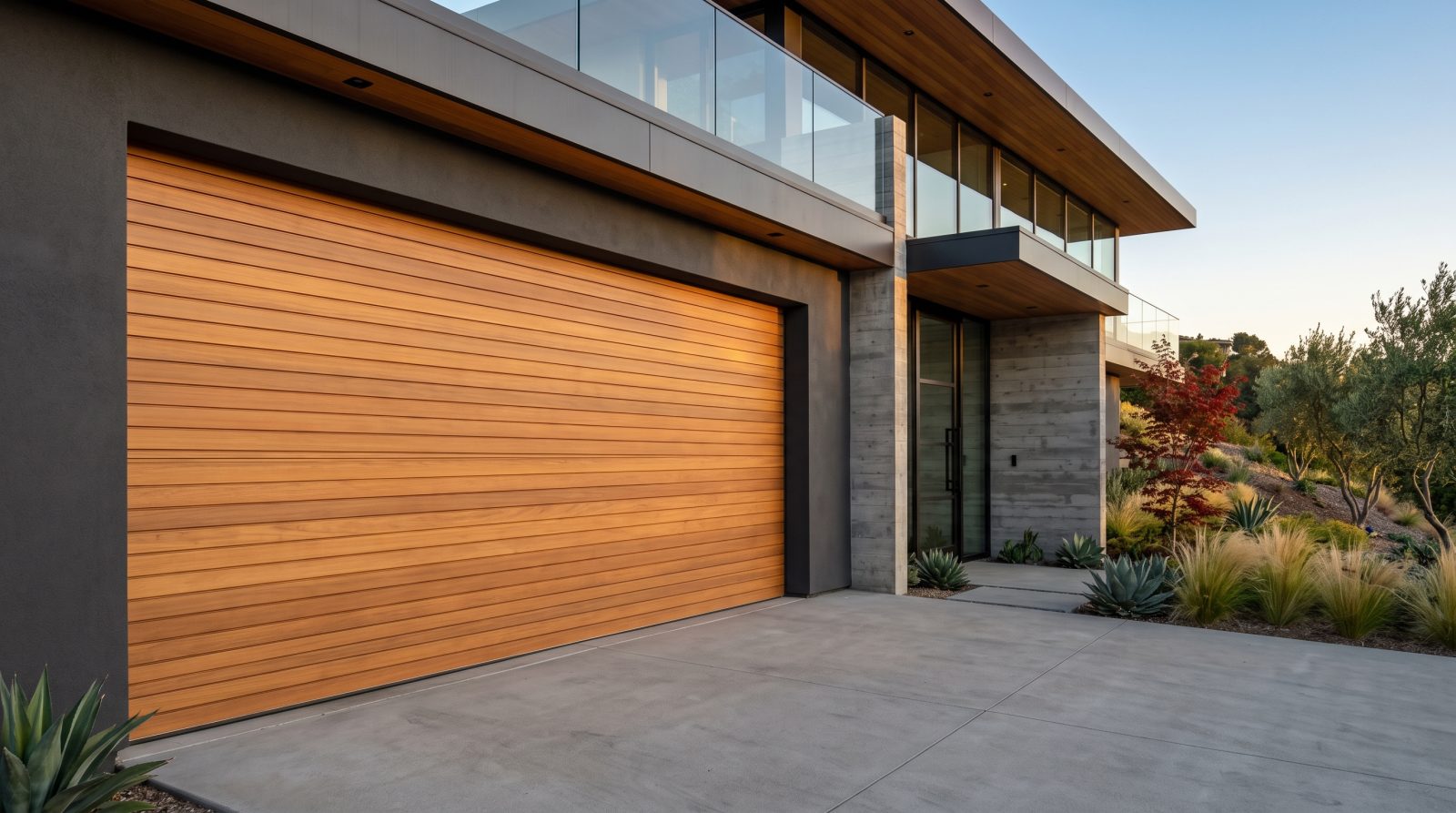
Modern garage door design is less about a single product and more about a visual language: simplicity, symmetry, and restraint. Where traditional doors lean on raised panels, decorative hardware, and arched windows, contemporary doors favor a flat or lightly textured face, long horizontal sight lines, and hardware that disappears into the design. The result reads calm and architectural rather than ornamental, which is why these doors pair so naturally with mid-century, ranch, and new-build homes.
Because the garage door is often the single largest design element on a home's front elevation, the style you choose carries real visual weight. A flush, monochrome door can make a modest house look intentional and current; the wrong finish or an awkward window layout can fight the rest of the facade. That is also why proportion matters so much: glass placement, the rhythm of the section lines, and how the color relates to trim and front door all shape whether the look feels cohesive.
- Flush or ribbed steel sections with no raised panels for a clean, flat face
- Full-view doors built from aluminum frames and glass for an open, gallery-like look
- Frosted, tinted, or seedy glass for daylight without sacrificing privacy
- Horizontal-plank or 'long-panel' layouts that emphasize width and ground the elevation
- Hidden or low-profile hardware, hinges, and tracks that keep the surface uninterrupted
- Matte, monochrome finishes and dark anodized aluminum in place of glossy white
Which modern garage door styles and materials should you compare?
Most contemporary doors fall into a few material families, and each one trades off differently across price, weight, insulation, and maintenance. Steel remains the workhorse: it is affordable, available in flush and ribbed contemporary profiles, and can be ordered insulated. Aluminum-and-glass full-view doors deliver the signature modern look and flood the garage with light, but glass is heavier per section and insulates poorly, which matters in hot and cold climates alike. Composite and faux-wood (often a steel or fiberglass skin with a wood-grain finish) give you the warmth of timber with far less upkeep than real wood, which can crack, swell, or fade if it isn't refinished on schedule.
Real wood is still the premium choice for warmth and craftsmanship, but it is the most demanding option to live with and the heaviest, which puts more strain on springs and openers over time. When you compare, weigh four things together: how the material handles your regional climate, how much insulation you actually need, how heavy the finished door will be on its hardware, and how much maintenance you are realistically willing to do. A heavier door is not just a cost question; it is a reliability question, because every extra pound is load that the spring system and opener carry thousands of cycles a year.
- Steel (flush/ribbed): budget-friendly, durable, insulatable; can dent and may show rust at scratches in coastal or road-salt regions
- Aluminum + glass (full-view): the iconic modern look and lots of light; lower insulation value and a higher price point
- Composite / faux-wood: wood-grain warmth with low maintenance; mid-to-upper price range
- Real wood: highest visual warmth and the most upkeep; heaviest, with periodic refinishing in sun- or moisture-heavy climates
- Fiberglass: lightweight and won't rust, but can crack in hard impacts or extreme cold
How do finishes, color, and glass change the look and the upkeep?
Finish is where a modern door earns its character. Powder-coated and anodized aluminum hold deep, even color and resist fading better than older painted finishes, which is part of why dark grays, blacks, bronzes, and warm wood-tone wraps have become the contemporary default. Matte and low-sheen finishes hide minor surface texture and fingerprints better than gloss, and they tend to photograph and age more gracefully on a large vertical surface. If you choose a very dark color, remember that dark faces absorb more heat in direct sun, which is worth factoring in for south- and west-facing garages in hot regions.
Glass is the other defining choice. Clear glass gives the most open, architectural feel but offers the least privacy and the lowest insulation. Frosted, satin, and tinted options keep the modern aesthetic while obscuring the view inside, and insulated or laminated glazing improves both temperature control and impact resistance. Tempered or laminated glass is also a meaningful safety and security upgrade over single-pane glass, since it is far harder to shatter cleanly. As a rule, the more glass you add, the more you trade insulation and privacy for light, so match the glazing to how you actually use the space and to your climate.
- Powder-coated or anodized finishes resist fading better than older painted coatings
- Matte and satin sheens conceal texture, dust, and fingerprints; gloss highlights them
- Dark colors look striking but absorb more solar heat on sun-facing elevations
- Frosted/tinted glass keeps the modern look while adding privacy
- Insulated or laminated glazing improves temperature control and impact/security resistance
- Coordinate the door color with trim, front door, and window frames so the facade reads as one design
How much do modern garage doors cost, and what drives the price?
Treat any number you see online as a typical industry range, not a quote. Pricing swings widely with material, size (single vs. double), insulation, the amount of glass, the finish, and your local labor market, so the only accurate figure is a measured estimate for your specific opening. As a rough orientation, basic non-insulated steel doors typically fall at the lower end of the range, insulated steel and composite/faux-wood land in the middle, and full-view aluminum-and-glass and custom wood sit at the top. Larger double doors, premium glazing, custom colors, and added insulation all push the total upward.
Installation and removal of the old door are usually separate line items from the door itself, and a few situational costs can add up: reinforcing the door for a heavier glass build, upgrading the spring system to match the new door's weight, or replacing an opener that isn't rated for a heavier panel. These are not upsells so much as physics. If you install a much heavier modern door on springs and an opener sized for the old one, you invite premature wear and the kind of sudden failure that leaves a car trapped or a door stuck. Budgeting for properly matched hardware up front is almost always cheaper than an emergency repair later.
- Material and amount of glass are the biggest price drivers, followed by size and finish
- Insulation, custom colors, and premium glazing each add to the base cost
- Old-door removal, disposal, and installation are typically priced separately
- A heavier modern door may require a matched spring system and an opener rated for the load
- All figures are estimates that vary by door, material, region, and scope — get a measured quote
Where modern design meets daily reliability — and how to avoid an emergency
This is the part most style guides skip, and it is the part that matters most once the door is hung. A garage door is a high-tension mechanical system that cycles thousands of times a year, and a modern aesthetic interacts with that system in concrete ways. Heavier glass and wood builds load the springs and opener harder. Slim, hardware-light designs can be less forgiving if the door ever drifts off-track. And big glass panels, while beautiful, change how a door behaves under impact and how exposed your home feels if a panel is damaged. Choosing the look is the fun part; choosing a build your hardware can carry safely for years is the smart part.
Spring systems carry almost the entire weight of the door, which is exactly why a snapped spring on a heavy modern door is so disruptive — and why it is genuinely unsafe to force. Garage doors and their high-tension components are a well-documented source of serious injuries each year, with springs, cables, and pinch points among the common culprits, so they are not a safe DIY repair under load. If your modern door suddenly won't open, feels far heavier than usual, slams shut, or hangs crooked in the tracks, stop using it. A door stuck open is a security and weather exposure problem; a door stuck closed can trap your vehicle; and a door that has jumped its track can fall. In every one of those cases, the safe move is to leave it alone and get same-day help rather than risk a spring, cable, or panel failing under load.
You can prevent most of these emergencies with a few habits. Listen for new grinding, popping, or scraping sounds, which often precede a failure. Watch for jerky travel or a door that no longer holds position halfway, both signs of spring or balance trouble. Keep the photo-eye safety sensors clean and aligned. And when you replace a door, insist that the installer balance the door and confirm the spring and opener are correctly sized for the new weight. A door that is properly balanced and matched to its hardware is quieter, lasts longer, and is far less likely to strand you.
- Heavier glass/wood designs need correctly sized springs and a load-rated opener
- New grinding, popping, or scraping noises often warn of a coming failure
- A door that feels suddenly heavy, slams, or hangs crooked has a spring or balance problem — stop using it
- Never try to force, lift, or 'fix' a door with a broken spring or cable yourself — these are under extreme tension
- A stuck-open door is a security/weather risk; a stuck-closed door can trap your car — both warrant same-day help
- Keep photo-eye sensors clean and have the door balanced and tuned after any new install
How regional climate should influence your modern door choice
Because this is a nationwide guide, it is worth being honest that the 'best' modern door is partly a function of where you live. In hot southern and desert climates, heat is the main stressor: dark finishes and large glass panels can turn an attached garage into an oven, so insulated cores, lighter or heat-reflective finishes, and tinted or insulated glazing pay off. In cold northern regions, insulation R-value and weather sealing matter more, and full-view glass doors give up the most heat, so many homeowners there choose insulated steel or composite with a smaller band of glass for the look without the energy penalty.
Coastal and high-humidity areas add corrosion to the equation. Salt air is hard on raw steel hardware and fasteners, which is why aluminum, fiberglass, and well-finished or stainless components hold up better near the water. Storm-prone regions may have wind-load building code requirements that affect which doors are permitted at all, since the garage door is often a home's largest opening and a known weak point in high winds. In any climate, the through-line is the same: pick the modern look you love, then specify the insulation, glazing, and corrosion-resistance that your specific weather demands so the door stays reliable instead of becoming a recurring repair.
- Hot/desert: prioritize insulation, lighter or reflective finishes, and tinted or insulated glass
- Cold/northern: favor higher R-value insulation and tight weather seals; limit unglazed full-view glass
- Coastal/humid: choose aluminum, fiberglass, or corrosion-resistant hardware to fight salt and moisture
- Storm-prone: check local wind-load code requirements, which can dictate allowable door builds
- Match insulation, glazing, and materials to climate rather than choosing on looks alone