The Core Principle: A Garage Door Is a Counterbalanced System, Not a Motor That Lifts
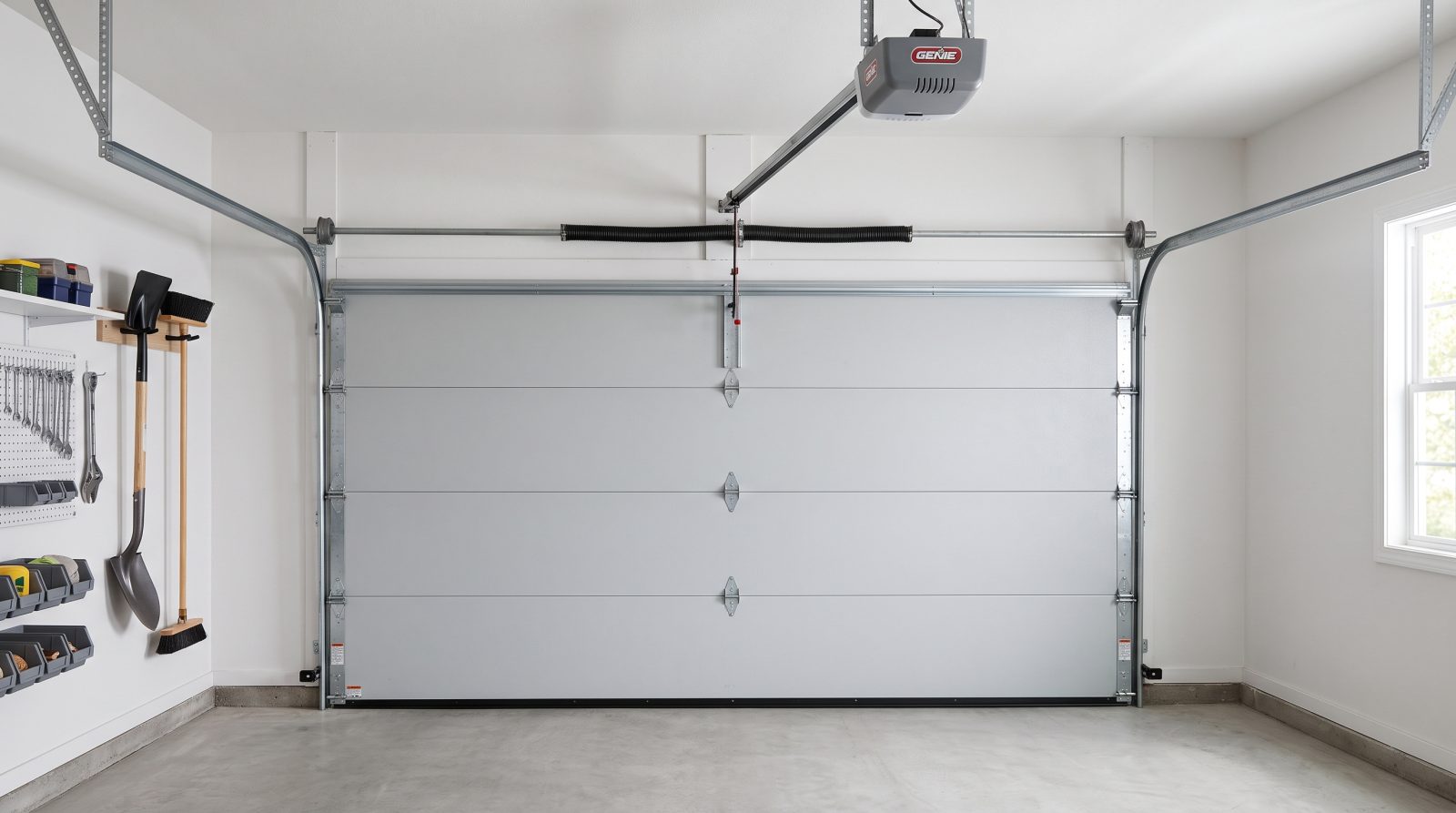
The single most important thing to understand about a garage door is that the opener motor does not do the heavy lifting. A double garage door can weigh anywhere from roughly 130 to over 350 pounds depending on material, insulation, and size, and no residential opener is built to hoist that dead weight repeatedly. Instead, the system uses springs to counterbalance the door's weight so that, in theory, you could lift the door by hand with one arm. The opener's real job is simply to start and stop that already-balanced movement and to hold the door in place.
This is why spring failure is so dramatic. When a spring breaks, the counterbalance disappears instantly and the door's true weight slams back onto the cables, the track, and the opener — none of which are designed to carry it. A door that was effortless yesterday becomes a dead-weight slab today. It is also why a properly balanced door is the foundation of a safe, long-lasting system: when the balance is right, every other component works within its limits, and when the balance is off, the whole system wears out fast.
You can test balance yourself safely without tools. With the door closed, pull the opener's manual release cord and lift the door by hand to about waist height, then let go. A well-balanced door stays roughly in place. If it slams down or shoots up, the spring tension is wrong or a spring is failing, and that is a clear signal to stop using the opener and request service before something gives way.
- The opener guides and holds the door; springs carry the actual weight.
- A balanced door can be moved by hand with light effort — that is by design, not luck.
- When balance is wrong, the opener, cables, and rollers all wear out prematurely.
- A door that crashes down or flies up during a manual balance test is unsafe to keep operating.
Springs and Cables: The High-Tension Heart of the System
Two spring types dominate residential doors. Torsion springs mount horizontally on a metal shaft above the door opening; they store energy by twisting and are the most common, durable, and controllable design. Extension springs run along the horizontal tracks on each side and stretch as the door closes; they are common on older or lighter doors and are usually paired with safety cables that contain the spring if it breaks. Either type holds an enormous amount of stored energy at all times — even when the door is sitting still and looks completely inert.
Lift cables work hand-in-hand with the springs. These braided steel cables connect the bottom corners of the door to drums on the torsion shaft (or to the spring system on extension setups), translating the springs' energy into the smooth vertical travel of the door. When a cable frays, slips off its drum, or snaps, the door typically lurches to one side, hangs crooked, or jams in the opening. A door that suddenly sits at an angle is almost always a cable or drum problem, and continuing to run the opener will usually make the misalignment worse and can pull the door fully off its track.
This is the part of the guide to take most seriously: torsion and extension springs and their cables are the components that genuinely injure people. The stored tension can release with enough force to break fingers, hands, and wrists, and DIY spring adjustment with improvised tools is a leading cause of serious garage-related injuries. Spring lifespan is usually measured in cycles — commonly in the range of about 10,000 cycles for standard springs, which can mean only a handful of years in a busy household — and they should be replaced in matched pairs by a trained technician using proper winding bars. If a spring has visibly broken, the door is stuck, or a cable is hanging loose, the safe move is to leave the door alone and get same-day help rather than risk a sudden release of that tension.
- Torsion springs (above the door) and extension springs (along the tracks) both store dangerous energy even at rest.
- Lift cables convert spring energy into smooth travel; a snapped cable usually leaves the door crooked or jammed.
- A door hanging at an angle points to a cable or drum failure — stop using the opener immediately.
- Spring life is measured in cycles, so a heavily used door wears springs out faster than an occasional one.
- Spring and cable work is a trained-technician job; improvised DIY adjustment is a top cause of severe hand injuries.
Tracks, Rollers, Hinges and Panels: What Guides the Door and Holds It Together
Once the springs handle the weight, the door still needs something to guide its path and hold its shape. Vertical and horizontal tracks form an L-shaped or curved channel on each side that routes the door from the opening up to a resting position parallel with the ceiling. Rollers — small wheels on stems set into the door's edges — ride inside those tracks, and hinges connect the door's individual panels so the whole slab can flex around the track's curve as it opens. Sectional doors, the most common modern style, rely on this panel-and-hinge design to bend where a single rigid slab never could.
Most 'won't open or close smoothly' complaints trace back to this guidance system rather than the springs. Worn rollers grind and bind, bent tracks pinch the door, loose hinges let panels shift, and debris or hardened old grease in the track creates friction that the opener struggles against. A door that shudders, squeals, or stutters as it moves is usually telling you the rollers, hinges, or track alignment need attention. Climate plays a real role here too: in cold northern regions, grease can stiffen and metal contracts, making winter mornings the moment marginal rollers finally seize, while in coastal and humid areas, salt air and moisture accelerate rust on tracks, rollers, and hinges, and in hot, dusty climates, grit packs into the tracks and wears parts down faster.
Panels themselves are part of the mechanism, not just the look. A dented or bowed bottom panel can keep the door from sealing or seating squarely, and damage to the panel that holds the bottom roller or cable bracket can compromise the whole side of the door. Because the tracks and rollers control alignment, a door that has jumped its track is genuinely unsafe to operate — running the opener on an off-track door can twist the panels, bend the tracks further, or drop the door, so the correct response is to stop and call for service rather than wrestle it back into place.
- Tracks guide the door's path; rollers ride inside them and hinges let sectional panels flex around the curve.
- Grinding, squealing, or stuttering movement usually means worn rollers, loose hinges, or track misalignment — not a spring.
- Climate matters: cold stiffens grease and seizes parts, coastal salt air rusts hardware, and dust grinds down rollers.
- A door that has jumped its track should not be forced; running the opener can bend tracks and drop the door.
- Bottom-panel and bracket damage can compromise an entire side of the door's structure.
The Opener, the Safety Sensors, and the Electronics That Run It All
The opener is the powered unit mounted to the ceiling, and it moves the door through one of a few drive types. Chain drives use a metal chain and are durable and economical but louder; belt drives use a reinforced rubber belt for much quieter operation, which matters when bedrooms sit above or beside the garage; and screw drives use a threaded steel rod with fewer moving parts. A trolley travels along the rail and connects to the door through an arm, and the manual release cord — that red handle hanging from the trolley — disconnects the door from the opener so you can operate it by hand during a power outage or a malfunction. Knowing where that release cord is and how to use it is one of the most practical pieces of garage door knowledge a homeowner can have.
Modern openers are required to include a photo-eye safety system: two small sensors mounted a few inches above the floor on each side of the opening that shine an invisible beam across the threshold. If anything breaks that beam while the door is closing, the door is supposed to stop and reverse — a critical protection against closing on a child, a pet, or a car bumper. When a door refuses to close and the opener light blinks, misaligned, dirty, or sun-blinded photo eyes are the most common and most easily overlooked cause. Gently realigning or wiping the lenses often restores normal operation, and you should never disable this system to force a door shut.
Openers also include force and travel settings that tell the unit how far to move the door and how much resistance should trigger a reversal. When these drift out of adjustment, the door may reverse for no obvious reason, fail to close fully, or push too hard. It is worth understanding the safety logic here: many of an opener's 'failures' are actually the safety system doing its job in response to a mechanical problem elsewhere — a binding roller or a failing spring that increases resistance. Treating the symptom by cranking up the force is exactly the wrong move, because it overrides the protection that is trying to warn you. Today's openers frequently add battery backup, rolling-code remotes that change the access code with each use to resist code theft, and smartphone connectivity, but the safety reverse and photo eyes remain the non-negotiable core.
- Drive types: chain (durable, louder), belt (quiet), and screw (fewer parts) — choice often comes down to noise tolerance.
- The red manual release cord disconnects the door from the opener for outages and malfunctions — know where yours is.
- Photo-eye sensors stop and reverse the door if the beam is broken; misaligned or dirty eyes are the top reason a door won't close.
- Never disable the safety reverse or photo eyes to force a door shut.
- A door that reverses on its own is often the safety system reacting to a real mechanical problem — diagnose, don't override.
Reading the Warning Signs: How the Pieces Fail and When to Stop Using the Door
Because every part of a garage door works in concert, the system usually gives you warnings before a true emergency. Learning to connect a symptom to its likely cause lets you act early — and, just as importantly, tells you when a problem has crossed from 'schedule a repair' into 'stop using this door right now.' A loud bang from the garage followed by a door that won't lift is the classic signature of a broken torsion spring. A door that opens crooked or jams to one side points to a cable or drum. Grinding and shuddering through the travel points to rollers, hinges, or track alignment. A door that won't close and a blinking opener light points to the photo eyes or force settings.
Certain situations are genuine same-day priorities, not just inconveniences. A door stuck fully open is a security and weather exposure problem because your home and everything in the garage is left accessible. A door stuck closed can trap a vehicle you need, and trying to force it can damage panels or hardware. A visibly broken spring, a dangling or frayed cable, or a door hanging off its track all involve components under load or out of alignment, and operating the opener in any of these states tends to escalate the damage and the danger. In every one of these cases, the safest and ultimately cheapest path is to stop, avoid forcing it, and get fast professional help.
The reason 'don't force it' comes up so often is mechanical, not cautious boilerplate. A garage door is a balanced system carrying stored energy, and forcing a stuck door asks one weakened component to absorb loads the springs are supposed to share. That is how a single broken cable becomes a fully off-track door, or a tired spring becomes a sudden release. A short pause to call for service nearly always costs less than the repair created by one more forced cycle — and it keeps the people standing near a very heavy, very tensioned machine out of harm's way.
- Loud bang then a dead-weight door = likely broken spring; crooked or jammed = likely cable or drum.
- Grinding or shuddering = rollers, hinges, or track; won't close with a blinking light = photo eyes or force settings.
- Stuck open is a security and weather risk; stuck closed can trap your car — both are same-day priorities.
- A broken spring, loose cable, or off-track door means stop operating the opener immediately.
- Forcing a balanced, tensioned system is how small failures become expensive, dangerous ones.