Start With the Right Mindset: Safety, Then Style
It is natural to start with how a door looks, and curb appeal genuinely matters for resale and daily satisfaction. But the most important parts of a garage door are the ones you rarely see: the torsion or extension springs that counterbalance the weight, the cables that carry that tension, the rollers and track that guide the panels, and the opener that does the lifting. A beautiful door on a poorly specified or worn-out lifting system is both frustrating and dangerous. Springs in particular store an enormous amount of energy, and when they fail they can do so suddenly. That is why spring replacement, cable repair, and off-track corrections are jobs for a trained technician with the right tools, not a weekend project.
When you shop, keep two timelines in mind. The first is the planned upgrade, where you have weeks to compare materials and finishes. The second is the emergency, where a door has already failed and the priority is getting it safe again. If you are in the second situation right now, the smartest move is to stop using the door and get same-day help rather than trying to muscle it open or closed. A door that is stuck open is a security and weather exposure risk; a door stuck closed can trap a vehicle you need. Either way, forcing it risks bending panels, snapping more cables, or pulling the door further off its track.
Throughout this guide, treat every cost figure as a typical industry range, not a quote. Real pricing depends on your door size, the material and insulation you choose, your opener, how your old door is removed and disposed of, and regional labor rates. A single-car door in a mild climate and an oversized, insulated, custom-stamped double door in a region with harsh winters are very different purchases.
- Lifting hardware (springs, cables, rollers, track) is safety-critical and should be specified and serviced by a professional.
- Treat all prices here as estimated ranges that vary by door, material, region, and scope, never a fixed quote.
- If your existing door is already failing, prioritize a same-day repair over forcing it, especially with broken springs, snapped cables, or an off-track door.
Choosing a Material: Steel, Aluminum, Wood, Composite & Fiberglass
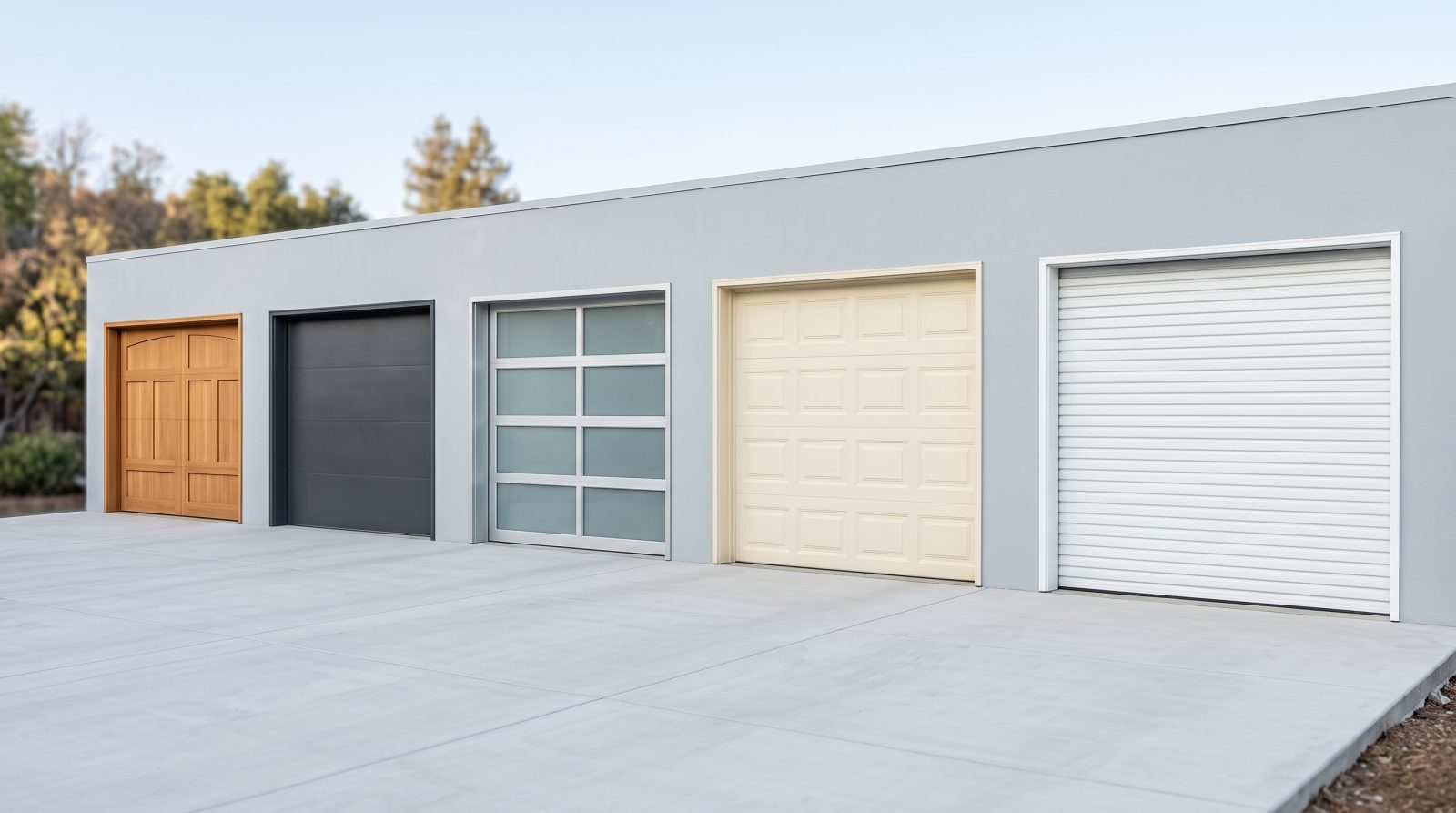
Material is the single biggest driver of how your door looks, what it costs, and how much maintenance it needs. Steel is the most common choice nationwide because it offers a strong balance of durability, security, and value, and it accepts insulation well. Steel doors come in different gauges (thicknesses); a lower gauge number means thicker, more dent-resistant steel. In coastal or high-humidity regions, look for galvanized and well-finished steel to resist corrosion, and rinse road salt off in snowy climates to protect the finish.
Aluminum with glass is popular for a modern, light-filled look and is naturally rust-resistant, which makes it appealing near the coast. The tradeoff is that aluminum dents more easily than steel and large glass sections insulate less effectively unless you specify insulated or tempered glazing. Wood doors deliver unmatched warmth and custom character, but they are the most maintenance-intensive: they need periodic refinishing and are sensitive to moisture, so they suit drier or milder climates better than wet ones unless you commit to upkeep. Composite and faux-wood doors aim to capture the wood look using engineered or overlay materials with far less maintenance, which is why they have grown in popularity.
Fiberglass and vinyl doors resist dents and corrosion and can be a smart pick in humid or coastal areas, though fiberglass can fade or become brittle with intense, prolonged sun exposure in very hot regions. There is no single best material for the whole country, the right answer depends on your climate, how exposed the door is to weather and sun, your tolerance for maintenance, and your budget. A door facing direct afternoon sun in a hot, dry climate has different demands than one battered by salt air or freeze-thaw cycles.
- Steel: most popular all-rounder; strong, secure, insulates well; choose a lower gauge for more dent resistance and galvanized finishes in salty or humid air.
- Aluminum and glass: modern look, rust-resistant, lighter; dents more easily and needs insulated glazing for thermal performance.
- Wood: beautiful and customizable but the highest maintenance; better suited to drier, milder climates or owners willing to refinish.
- Composite/faux-wood: wood appearance with much lower upkeep.
- Fiberglass/vinyl: dent- and corrosion-resistant, good for humid or coastal areas; fiberglass can be vulnerable to intense, prolonged sun.
Style and Construction: Panel Design, Windows, and How the Door Operates
Once material is settled, style brings the door to life. The most common format is the sectional door, made of horizontal panels that bend over a curved track and store along the ceiling. Within that format you can choose traditional raised-panel looks, clean flush or modern flat panels, or carriage-house styling that mimics old swing-out barn doors while still operating as a modern overhead door. Window inserts can add daylight and architectural interest; if privacy or security is a concern, consider frosted or obscure glazing, and remember that any glass section affects insulation.
Pay attention to how the door is built, not just how it is styled. Single-layer doors are a single skin of material with no insulation, the lightest and least expensive but also the least efficient and noisiest. Double-layer doors add a layer of insulation behind the skin. Triple-layer doors sandwich insulation between two layers of material, typically with a backer that resists dents, runs quieter, and feels more solid. For attached garages, rooms above the garage, or any space you heat or cool, the sturdier multi-layer construction usually pays off in comfort and noise even before you consider energy savings.
Match the door's proportions and color to your home's architecture. Lighter colors reflect heat, which can matter on a sun-baked, south- or west-facing elevation, while darker colors absorb more heat and may stress certain materials in very hot climates. The goal is a door that looks intentional, suits your facade, and is built to the level of insulation and durability your use case actually needs.
- Sectional overhead doors are the standard; styles range from traditional raised-panel to modern flush and carriage-house.
- Window inserts add light and character but reduce insulation; consider obscure glazing for privacy.
- Construction layers matter: single-layer is cheapest, while double- and triple-layer doors add insulation, quietness, and dent resistance.
- Color and finish affect heat absorption, lighter shades reflect more sun on hot, heavily exposed elevations.
Insulation and R-Value: What It Means and When It Pays Off
Insulation is measured by R-value: the higher the number, the better the door resists heat transfer. Single-layer doors offer little to no meaningful R-value, while double- and triple-layer doors can reach progressively higher numbers depending on the type and thickness of insulation. The two common insulation types are polystyrene, rigid foam boards fitted into the panels, and polyurethane, foam injected and expanded to fill the panel and bond the layers, which generally yields higher R-values and a more rigid, quieter door for a given thickness.
Whether insulation is worth the upgrade depends heavily on how you use the garage and where you live. If your garage is detached and purely for parking and storage, a high R-value matters less. But if the garage is attached, shares a wall with living space, sits beneath a bedroom, or doubles as a workshop, gym, or home office, insulation helps stabilize temperature, reduce strain on your home's heating and cooling, and cut down on noise from the door and the street. In regions with cold winters or intense summer heat, the comfort difference can be substantial; in very mild climates, the payoff is smaller and may be more about quietness and door rigidity than energy.
Insulation is not only about temperature. Weatherstripping along the bottom, sides, and between panels keeps out drafts, dust, water, and pests, and it works hand in hand with the door's insulation to seal the opening. Even a well-insulated door performs poorly if the seals are cracked or missing, so factor weather seals into both new-door decisions and ongoing maintenance, especially in climates with heavy rain, blowing dust, or freeze-thaw cycles.
- R-value measures resistance to heat transfer, higher is better; multi-layer doors carry meaningfully higher R-values than single-layer.
- Polyurethane insulation generally delivers higher R-value and a stiffer, quieter door than polystyrene of the same thickness.
- Insulation pays off most for attached garages, rooms above or beside the garage, and garages used as living or work space.
- Weatherstripping and bottom seals are essential partners to insulation, especially in wet, dusty, or freeze-thaw climates.
Budgeting Wisely: Where Your Money Goes and What to Prioritize
A new garage door is a meaningful purchase, and the total typically breaks into the door itself, the hardware and springs, optional or replacement opener, professional installation and removal of the old door, and any upgrades like windows, decorative hardware, or higher insulation. As a rough orientation, a basic single-layer steel single-car door installed sits at the lower end of the market, mid-range insulated steel doors occupy the broad middle, and large, custom, premium-material, or heavily insulated doors reach the upper end. These are estimated industry ranges only; your real number depends on size, material, insulation, opener, and regional labor, so get a tailored quote before budgeting firmly.
Resist the urge to choose on sticker price alone. The lowest-cost door is often single-layer and uninsulated, which can cost you in comfort, noise, and durability if your garage is attached or you live in a demanding climate. Conversely, paying for a high R-value or premium material on a detached, lightly used garage may be more than you need. The smartest spend is the one matched to your climate, how you use the space, and how long you plan to stay in the home. Spending a little more on appropriate insulation and quality hardware often returns value in daily comfort, lower noise, and fewer service calls.
Do not overlook the opener and the springs in your budget. Springs are wear items rated for a finite number of cycles, and a heavier insulated door needs springs correctly sized to its weight, getting this wrong causes premature failures and unsafe operation. If your opener is old, loud, or lacks modern safety sensors, replacing it alongside the door can be more cost-effective than a separate trip later. When you compare quotes, make sure each includes removal and disposal of the old door, all hardware, and properly sized springs so you are comparing complete, safe installations rather than just a panel price. When you are ready, request a free quote so the recommendation can be matched to your door size, climate, and how you use the garage.
- Budget covers the door, springs and hardware, opener, professional installation and old-door removal, plus any upgrades, not just the panel.
- Estimated ranges only: basic single-layer steel is entry-level, insulated steel fills the middle, and custom or premium doors reach the top, all varying by size, material, and region.
- Match the spend to your climate and use; appropriate insulation and quality hardware often pay back in comfort, quiet, and fewer repairs.
- Size springs to the door's actual weight and consider replacing an old or sensorless opener at the same time; confirm quotes include removal, hardware, and correctly sized springs.