Typical garage door opener cost ranges (unit + installation)
When people ask what a garage door opener costs, they are usually combining two separate numbers: the price of the opener unit itself and the labor to install it. Buying the opener at retail and installing it professionally are two different line items, and lumping them together is where most confusing quotes come from. Here is how the typical ranges break out so you know what you are actually paying for.
As a broad nationwide guide, the opener unit alone commonly runs from a budget chain-drive model on the low end to a premium belt-drive or wall-mount jackshaft model on the high end. Professional installation labor is usually a separate few-hour job. Combined, a straightforward replacement of a standard residential opener typically lands in the low-to-mid hundreds, while a premium quiet unit with smart features and accessories can push toward the upper hundreds. These are estimates that vary by your door's size and weight, your region's labor rates, and whether your existing wiring and mounting can be reused.
- Opener unit only (homeowner-supplied): typically a low-to-mid hundreds range depending on drive type and horsepower
- Professional installation labor alone: commonly a flat few-hour service charge, often one to several hundred dollars by region
- Complete supply-and-install of a standard opener: usually mid-hundreds as a typical all-in range
- Premium quiet belt-drive or wall-mount jackshaft, supplied and installed: can reach the upper hundreds
- Add-ons (extra remotes, keypad, smart hub, battery backup, new sensors): typically tens to low hundreds each
- All figures are typical industry estimates, not a quote, and vary by door, region, and existing setup
What drives the price up or down
Two homes on the same street can get very different opener quotes, and the reasons are usually predictable once you know what installers look at. The single biggest factor is the drive type, because it determines both the unit price and how quiet and durable the result will be. The second biggest is your door itself: a heavy, oversized, or insulated door needs more horsepower and a stronger opener, which costs more than a light single-car door.
Beyond the unit, the condition of your existing setup matters a lot. If your old opener's rail, wiring, wall button, and safety sensors are in good shape and compatible, an installer can often reuse them and keep labor short. If the rail is the wrong length for a new model, the wiring is brittle, or the door is so heavy it needs new springs to balance before the opener can lift it safely, the job grows. An opener should never be asked to compensate for a door that is out of balance, so a good technician checks the springs and balance first.
Region and climate play a real role too. Labor rates in major metro areas are typically higher than in rural areas, and homes in cold-winter climates more often want battery backup and a sealed, weather-tolerant unit, while hot, humid, or coastal regions tend to wear out cheaper plastic gears and electronics faster, nudging buyers toward sturdier belt-drive or metal-gear models.
- Drive type: chain-drive is cheapest; belt-drive is quieter and mid-priced; wall-mount jackshaft is premium
- Horsepower needed: heavier, insulated, double-wide, and wood doors need stronger (and pricier) units
- Reuse vs. replace: compatible existing rail, wiring, and sensors keep labor low; replacing them adds cost
- Door balance and spring health: a poorly balanced door may need spring service first, which is a separate cost
- Smart and safety features: Wi-Fi connectivity, app control, battery backup, and new photo-eye sensors add to the total
- Regional labor rates and climate: metro and cold-climate jobs often run higher; coastal humidity favors sturdier units
Drive types explained: matching the opener to your situation
The drive type is the heart of the cost decision, so it helps to understand what you are really choosing between. A chain-drive opener uses a metal chain to move the door and is the most affordable and most durable for the money, but it is also the loudest, which matters if there is a bedroom above or beside the garage. A belt-drive opener swaps the chain for a reinforced rubber belt; it is noticeably quieter and a popular middle choice, at a moderately higher price.
A wall-mount or jackshaft opener mounts on the wall beside the door instead of on the ceiling. It frees up overhead space, runs very quietly, and suits high or cathedral garage ceilings and heavier doors, but it sits at the premium end of the price range. Screw-drive openers, which use a threaded steel rod, are less common now but can be a reasonable middle option in moderate climates; they can be sensitive to temperature swings in regions with hard freezes or extreme heat.
For most homeowners replacing a dead unit, a belt-drive opener offers the best balance of quiet operation, longevity, and cost. If the garage is detached or noise is a non-issue, a chain-drive saves money with no real downside. If you have a finished room over the garage or limited headroom, the wall-mount premium is often worth it.
- Chain-drive: lowest cost, very durable, loudest; great for detached or workshop garages
- Belt-drive: quiet, mid-priced, the popular all-around pick for attached garages
- Wall-mount / jackshaft: premium, quietest, frees ceiling space, handles heavy and high doors
- Screw-drive: middle-ground option, fewer parts, but can react to extreme cold or heat in some regions
When a dead opener is urgent — and what to do right now
A garage door opener that simply stops responding is usually an inconvenience rather than a danger. The exception is when it leaves your only vehicle locked inside and you need to get out, or when the door is stuck partway and open, leaving your home exposed. In those moments the safe, calm move is to use the manual release rather than fighting the motor or forcing the door.
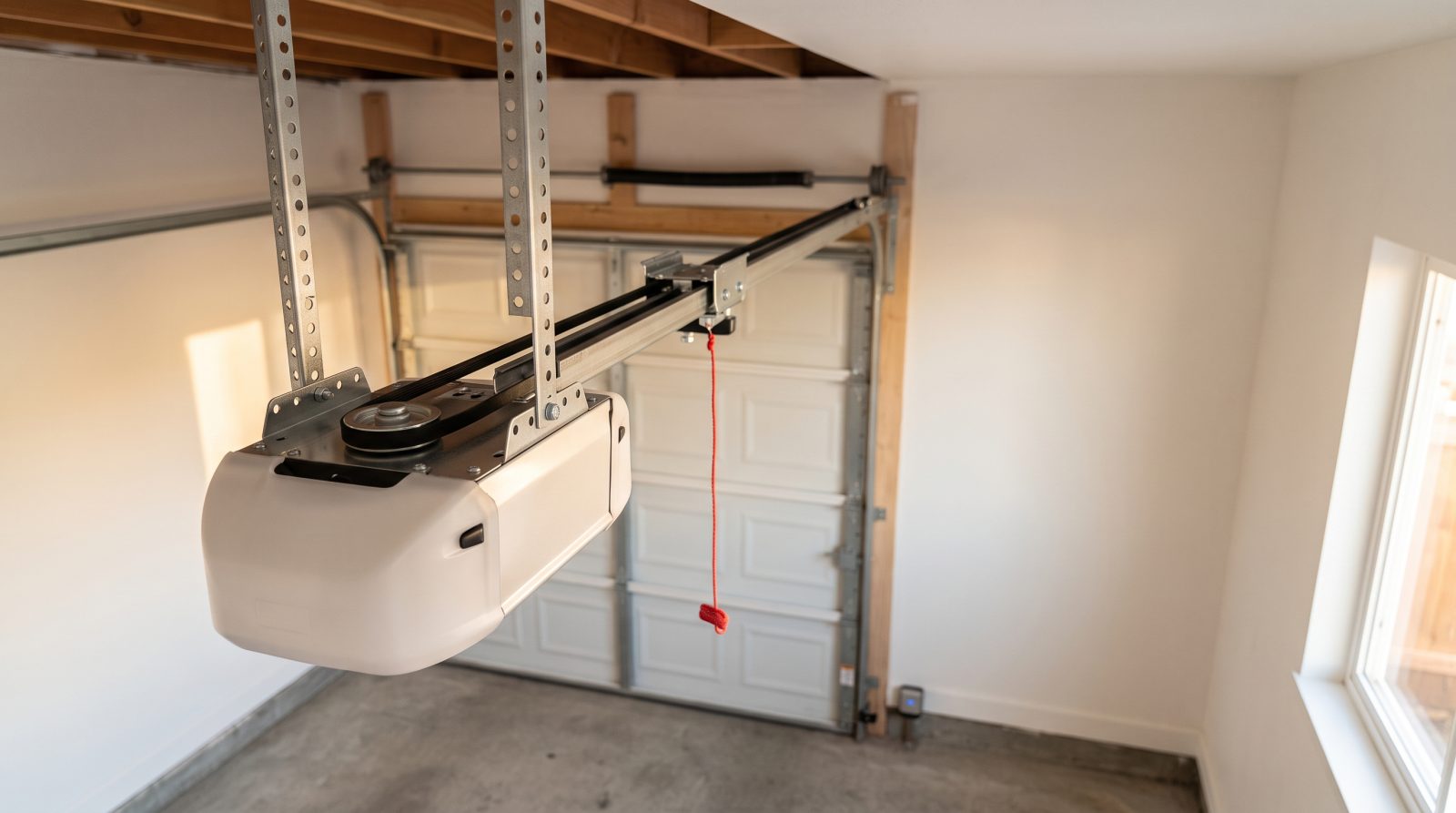
Almost every opener has a red emergency-release cord hanging from the trolley. Pulling it disconnects the door from the opener so you can lift the door by hand. Important safety point: only use the manual release when the door is fully closed, or when you are certain the springs are intact. If a spring is broken, the door can be extremely heavy and can drop fast; do not pull the release on a door that is open or that slammed shut, and do not try to force a door that feels jammed or off-track. Those are signs of a spring, cable, or track problem, not just an opener problem, and forcing it risks injury and further damage.
If the opener is the only issue and the door is balanced and closed, you can operate it manually until a replacement is installed. If anything about the door's movement feels heavy, crooked, or unsafe, leave it alone and get a same-day professional out to look at it. A reputable technician can often diagnose whether you genuinely need a new opener or just a sensor alignment, a new remote, or a minor repair, which can save you the full replacement cost.
- Locate the red manual-release cord on the opener trolley to disconnect and operate the door by hand
- Only pull the release when the door is fully closed or you are sure the springs are sound
- Never force a door that is stuck, crooked, or off-track — that points to springs, cables, or track, not just the opener
- If the door is stuck open, treat it as a security issue and arrange same-day help
- Ask a technician to confirm it's truly the opener before paying for a full replacement
Repair vs. replace: getting the most value
Before you pay to replace an opener, it is worth knowing that a surprising number of opener failures are cheap fixes in disguise. A door that won't close and reverses instead is very often a misaligned or dirty photo-eye safety sensor, not a failed motor. A remote that stopped working may just need a battery or reprogramming. A unit that hums but won't move could have a stripped drive gear, which on some models is an inexpensive part swap rather than a whole new opener.
The replace decision usually makes sense when the opener is old, the motor is burned out, replacement parts are discontinued, or the unit lacks modern safety sensors that became standard for good reason. If you are already replacing it, that is also the natural moment to upgrade to a quieter belt-drive, add battery backup so you can still get out during a power outage, or add smart access so you stop worrying about whether you left the door up. Folding those upgrades into one visit is cheaper than adding them later.
One honest caution: an opener is only as safe as the door it lifts. If a technician points out worn springs, frayed cables, or a door that is out of balance, address those alongside the opener. Installing a brand-new opener on a failing door just transfers the strain to the new motor and shortens its life.
- Common cheap fixes first: sensor realignment, fresh remote battery, reprogramming, or a single gear
- Replace when the motor is dead, parts are discontinued, or the unit predates modern safety sensors
- Bundle upgrades into one visit: belt-drive for quiet, battery backup for outages, smart access for peace of mind
- Fix door balance, springs, and cables together so the new opener isn't overloaded
- Get the diagnosis in writing so you know exactly what you're paying for