What a Garage Door Repair Actually Costs (Typical Ranges)
Most single-issue garage door repairs land somewhere in the low-to-mid hundreds of dollars, with the heavier structural jobs reaching higher. The reason the range looks so broad is that a garage door is a system of high-tension parts working together, and the cost depends entirely on which part has failed and how much of the system was affected when it did. A quick adjustment is a different animal from a torsion spring replacement, which is itself different from rebuilding a door that came off its track and bent panels on the way down.
As a rough orientation before the breakdowns below, minor adjustments and small hardware fixes tend to be the least expensive, spring and cable work sits in the middle, and opener replacement or multi-part structural repair sits at the top. A service call or diagnostic fee is common and is frequently credited toward the repair if you proceed. These are typical national ranges and will shift with your region, your door size and weight, and whether premium or builder-grade parts are used.
- Service/diagnostic call: often a modest flat fee, frequently applied to the repair if you go ahead
- Minor adjustments (alignment, lubrication, sensor realignment, fastener tightening): typically $75-$200 as an estimate
- Roller replacement: typically $100-$250 depending on quantity and roller grade
- Cable replacement (one or both): typically $120-$300 as an estimate
- Spring replacement: typically $150-$400+ per spring depending on type and door weight
- Opener repair or replacement: typically $150-$600+ depending on parts vs. full unit
- Off-track or multi-panel structural repair: typically $200-$800+ depending on damage
Cost by Repair Type: Springs, Cables, Rollers, and Tracks
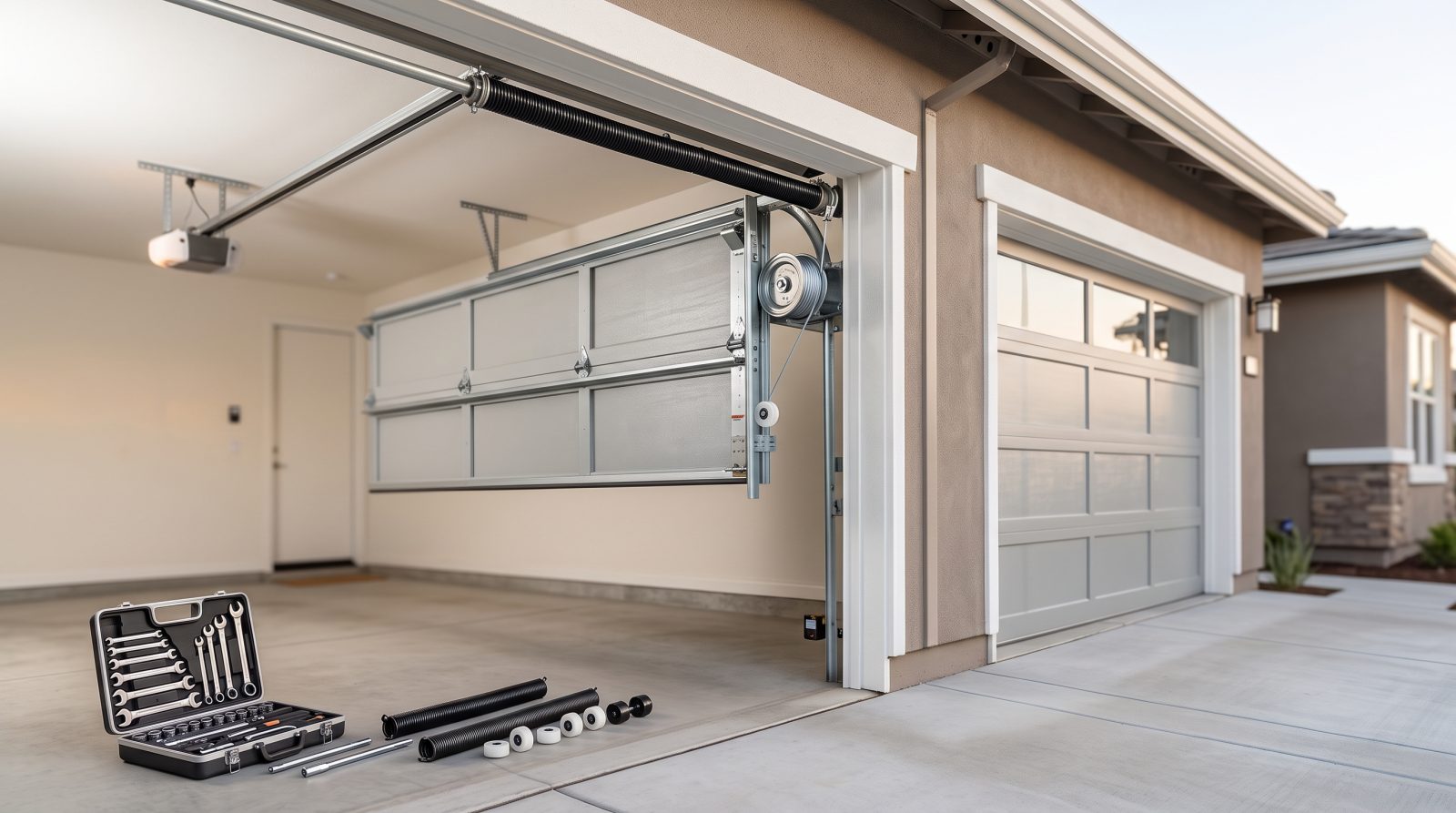
Broken springs are the single most common urgent repair, and they are also the one people most often underestimate. A garage door spring counterbalances the entire weight of the door, often 100 to 350+ pounds, so when it snaps the door becomes deadweight that the opener was never designed to lift. There are two main systems: torsion springs (mounted on a bar above the door) and extension springs (running along the tracks). Torsion springs generally cost more to replace but tend to last longer and operate more smoothly. Because springs are under extreme tension and a slip can cause serious injury, this is firmly a professional job, not a DIY one.
Cables run alongside the springs and share the load. A frayed or snapped cable can let one side of the door drop, leaving it crooked, jammed, or partially open. Replacing cables is typically less expensive than springs, but it is common for a technician to recommend doing springs and cables together when both are near the end of their service life, because the labor overlaps and a fresh cable on a tired spring (or vice versa) tends to fail again soon. Rollers, the wheels that guide the door in the track, wear out gradually; nylon rollers usually cost a bit more than steel but run quieter and tend to last longer.
Tracks are the rails the door travels in. Minor track issues are often a cleaning, realignment, or fastener fix on the lower end of the range. A door that has come fully off its track, though, is a different situation: forcing it can bend the track, gouge panels, and turn a moderate repair into a major one. If your door is hanging at an angle or stuck mid-travel, stop operating it and request help rather than risk compounding the damage.
- Torsion springs: longer-lasting, smoother, generally higher cost than extension springs
- Extension springs: common on lighter doors, usually a lower per-spring cost
- Replacing both springs at once is common practice and often more economical per visit
- Cables are frequently bundled with spring work since the labor overlaps
- Nylon rollers usually cost slightly more than steel but are quieter and longer-lived
- A fully off-track door should not be operated until inspected
Garage Door Opener Repair vs. Replacement Cost
When a door won't respond, the opener is a frequent suspect, but it is not always the part that needs replacing. Sometimes the fix is inexpensive: realigning the safety sensors at the base of the tracks, replacing a worn gear or trolley, swapping a circuit board, or reprogramming a remote. These targeted repairs typically fall in the lower-to-middle part of the opener range. A full opener replacement costs more because you are paying for a new unit plus installation and disposal of the old one.
Opener type drives a lot of the price difference. Chain-drive units are usually the most affordable but noisier; belt-drive units generally run quieter and cost more; and modern smart openers with battery backup, Wi-Fi, and camera features tend to sit at the top. Horsepower (or the DC equivalent) matters too, since heavier and insulated doors need a stronger motor. If your opener is more than 12 to 15 years old, lacks modern safety sensors, or is failing repeatedly, replacement often makes more sense than pouring money into incremental repairs.
One important safety note: a struggling opener is sometimes the symptom, not the cause. If the door is hard to lift by hand or feels unbalanced, the real problem may be a worn spring forcing the opener to overwork. Replacing the opener without addressing the spring just transfers the strain to a new motor. A good diagnosis checks the whole system, not just the part that's beeping at you.
- Sensor realignment or remote reprogramming: often a low-cost fix
- Gear, trolley, or circuit board repair: mid-range, cheaper than a full unit
- Chain-drive replacement: most affordable, noisier operation
- Belt-drive replacement: quieter, higher cost
- Smart openers with battery backup/Wi-Fi: highest cost, most features
- An overworked opener can signal a spring problem, so the whole system should be checked
What Drives the Price Up or Down (and Regional Differences)
Two homes with the same broken part can still get different quotes, and the reasons are usually straightforward. Door size and weight matter because a wide two-car or insulated steel door needs heavier-duty springs, cables, and hardware than a light single door. Material plays a role too: basic steel is the most economical, while solid wood, glass-and-aluminum, and custom doors carry pricier parts. Accessibility, the age of the system, and whether multiple worn parts are failing at once all push the number in one direction or the other.
Region and climate genuinely affect both price and wear, and it's worth being honest about how. Labor rates are simply higher in major metro areas and coastal regions than in many smaller markets, so the same repair can cost noticeably more in one ZIP code than another. Climate shapes how fast parts wear: in cold-winter regions, springs and metal hardware contract and grow brittle, and many spring breaks happen on the first hard freeze of the season. In coastal and humid areas, salt air and moisture accelerate rust on cables, tracks, and rollers. In hot, dry climates, sun exposure and heat cycling can degrade weather seals and certain materials faster. None of this changes the repair you need, but it explains why pricing and timing vary across the country.
Finally, scope is the biggest single variable. A clean, single-part fix is predictable. A door that was forced after a failure, or one that's been limping along with several aging components, can turn into a layered repair where springs, cables, rollers, and a panel all need attention. Catching a problem early, while it's still one part, is almost always the cheaper path.
- Door size/weight: wider and insulated doors need heavier, costlier hardware
- Material: steel is most economical; wood, glass, and custom doors cost more
- Metro and coastal labor rates typically run higher than smaller markets
- Cold climates: brittle springs and seasonal first-freeze breaks
- Coastal/humid climates: rust on cables, tracks, and rollers
- Bundling overlapping repairs is often cheaper than separate visits
- Early single-part fixes beat waiting for a multi-part failure
How to Get a Fair Quote and Avoid Overpaying
The best protection against an inflated bill is understanding what you're being quoted for. A trustworthy estimate names the specific parts and the labor, rather than a single vague number, and a good technician will explain why a part needs replacing instead of just adjusting. Ask whether the diagnostic fee applies to the repair, whether parts carry a warranty, and whether the recommended work is needed now or simply worth watching. Be cautious of pressure to replace the entire door when a targeted repair would restore safe operation.
There is also a real difference between an urgent safety repair and a planned upgrade, and it's smart to treat them differently. A snapped spring or off-track door that has trapped your car or left your home insecure deserves same-day attention, because an open or stuck door is both a security exposure and a hazard if anyone tries to force it. A cosmetic dent or an aging-but-functional opener, by contrast, can wait until you've compared options. Knowing which bucket your situation falls into keeps you from overpaying for speed you don't need, or skimping on speed you do.
When you're ready, the fastest way to turn these ranges into a real number is to describe your exact problem, door type, and rough door size. That lets a pro give you a grounded estimate instead of a generic one. If your door is currently stuck, hanging crooked, or won't secure, don't keep operating it. Request a free quote and get a clear picture of the safe fix before the situation gets more expensive.
- Insist on an itemized estimate: specific parts plus labor, not one vague figure
- Ask if the diagnostic fee credits toward the repair and whether parts are warrantied
- Be wary of full-door replacement pitches when a targeted repair would work
- Separate urgent safety repairs (springs, off-track, insecure door) from optional upgrades
- Describe your door type and size to get a grounded estimate rather than a generic one
- Stop operating a stuck or crooked door until it's inspected