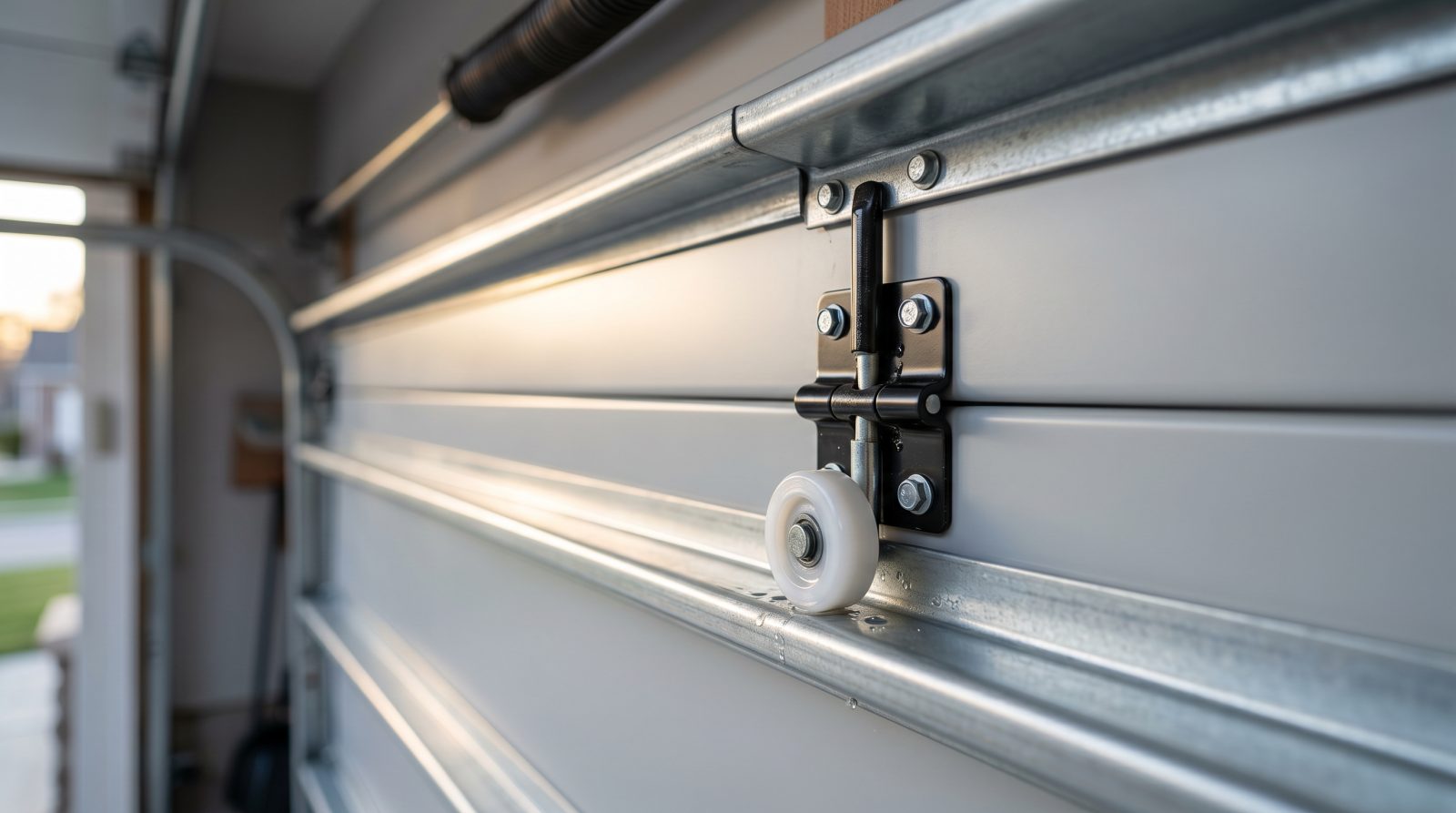
First, Listen: What Your Garage Door's Noise Is Telling You
Different noises point to different parts, and learning to match the sound to the source is the fastest way to know whether you are facing a five-minute lubrication job or a failing component. The key variables are the type of sound (rattle, squeal, grind, bang, pop) and when it happens (only on opening, only on closing, at a specific point in the travel, or the whole way). A door that is suddenly louder than it was last month has changed for a reason, and that reason is worth identifying before you keep cycling it.
It also helps to know what kind of opener and spring system you have, because that shapes both the normal sound profile and the safe limits of DIY. Chain-drive openers are inherently the loudest and clack as the chain rides the rail; belt-drive and screw-drive units are quieter, so new noise from them stands out more. Most homes use a torsion spring mounted on a bar above the door, while older or lighter doors may use extension springs running along the horizontal tracks — and the spring system is the one area that is never safe to adjust yourself.
- Rattling or vibrating: usually loose nuts, bolts, hinges, or track brackets that have worked free from normal cycling.
- Squealing or squeaking: dry rollers, hinges, or springs that need cleaning and lubrication.
- Grinding or scraping: worn nylon/steel rollers, a door drifting off-track, or a strained opener gear.
- Rumbling or vibrating through the whole door: often the springs, especially as the seasons and temperature change.
- Banging, popping, or a single loud snap: a potentially serious sign — a section binding, a spring under stress, or a cable/spring that has just failed.
- Clicking or straining from the opener motor with little movement: a worn opener gear or an over-tensioned, binding door.
The Safe DIY Fixes That Quiet Most Doors
The good news is that the majority of everyday garage door noise comes from neglect, not damage, and responds well to basic maintenance you can do safely with the door closed and the opener unplugged. Most doors get loud simply because the moving parts are dry and the hardware has loosened over years of cycling thousands of times. Tackling these in order — tighten, lubricate, inspect — resolves a large share of rattles and squeaks without any specialized tools.
Start by closing the door and disconnecting power to the opener so it cannot start while your hands are near the tracks. Work through the hardware methodically: snug up the bolts on the hinges, roller brackets, and the track mounting brackets with a socket wrench, but stop at snug — overtightening can strip threads or warp brackets. Then lubricate the right parts with the right product, because the wrong lubricant attracts grit and makes the problem worse.
Lubrication is where people most often go wrong. Use a product made for garage doors — a lithium-based or silicone-based spray — rather than a thin penetrating oil like WD-40, which is a cleaner and degreaser, not a long-term lubricant, and will leave parts dry again within weeks. In cold climates a silicone-based lubricant tends to hold up better through winter because it resists thickening in low temperatures; in hot, dusty, or coastal regions, wiping parts clean before re-lubricating keeps grit and salt from grinding into the metal. Plan on relubricating a few times a year, more often in harsh climates.
- Tighten (door closed, opener unplugged): hinges, roller brackets, and track-to-wall brackets — snug, not forced.
- Lubricate: rollers (not nylon wheels themselves, just the bearings/stems), hinges, springs, the torsion bar bearings, and the opener rail.
- Use the right product: a garage-door-specific lithium or silicone spray; avoid WD-40 as a long-term lubricant and never use grease that collects dust.
- Replace worn rollers: cracked or wobbling nylon rollers are a common, affordable, noise-causing culprit (but leave bottom-bracket rollers to a pro — see below).
- Check the opener: chain-drive units quiet down with proper rail lubrication; a sagging chain that slaps the rail may need professional adjustment.
- Add isolation if needed: anti-vibration pads or a rubber buffer where the opener mounts can cut noise transmitted into living space above the garage.
Noises That Mean Stop — and Why Forcing It Is Dangerous
Some sounds are not maintenance items — they are failure warnings, and continuing to operate the door can turn a repairable problem into a stuck, off-track, or unsafe door. The single most important rule with a noisy garage door is this: a loud bang, a sharp pop, or a sudden change in how the door feels (heavy on one side, jerky, or refusing to travel smoothly) means stop cycling it and have it inspected the same day. Garage door springs and cables store enormous energy, and a part that is making new, harsh noise is often a part that is about to give way.
The reason this matters so much is the spring system. Torsion and extension springs are wound to counterbalance the full weight of the door — often well over a hundred pounds — and they are under constant, high tension. A grinding, rumbling, or popping spring can snap, and a failing cable can whip loose; if the door is open when that happens, it can come down fast. This is also why spring and cable work is the one area we firmly steer homeowners away from doing themselves: it is the most common source of serious garage door injuries, and it requires specialized winding bars and training to do safely.
If your door is grinding and visibly pulling to one side, or a roller has jumped its track, do not try to muscle it back into place or keep running the opener. An off-track door can fall or jam, and forcing the opener against a bound door strains the motor and can damage the panels. Disconnect the opener using the manual release cord (the red handle), leave the door in a safe position if you can do so without lifting a heavy or partially-open door, and get professional help. The same goes for a door that is loud and stuck open — a wide-open door is a security and safety exposure, and that combination warrants fast attention rather than repeated attempts to close it.
- A loud bang or single sharp pop: often a spring or cable failing — stop and get same-day help.
- New grinding plus the door pulling crooked or jerking: a roller off-track or a binding section; do not force it.
- Visible gap or kink in a spring, or a hanging/frayed cable: high-tension hazard — do not touch the springs or cables yourself.
- Opener straining loudly but the door barely moves: a binding door or worn opener gear; cycling it repeatedly makes it worse.
- Door loud and stuck open or stuck closed: a security and safety concern that deserves prompt professional attention, not repeated force.
- Any noise paired with the door feeling much heavier than usual: the counterbalance (springs) may be failing — stop using it.
Why Doors Get Noisier With Age and Climate
Even a well-maintained door tends to get louder over the years, and understanding why helps you anticipate problems instead of reacting to them. Every open-and-close cycle puts wear on rollers, hinges, and springs, and a typical household door runs through several cycles a day — that adds up to thousands of cycles a year. Springs in particular are rated for a finite number of cycles, and as they age they lose smoothness and start to rumble before they ultimately fail, which is why a door that has been quiet for a decade can become noticeably noisy seemingly overnight.
Climate plays a real and often underestimated role, and it varies a lot by region. In cold-winter areas, metal contracts and lubricant can thicken in freezing temperatures, so doors are frequently loudest on the coldest mornings; the same door may quiet down by afternoon. In hot, dry, dusty regions, airborne grit settles into rollers and tracks and acts like sandpaper, accelerating wear. In coastal and humid areas, salt air and moisture promote rust on springs, hinges, and tracks, which both adds noise and shortens component life. None of this means anything is broken, but it does mean the right maintenance schedule looks different depending on where you live.
Wood and steel doors also behave differently as they age. Heavier wood doors put more sustained load on the spring system and hardware, while steel sections can develop their own rattles and panel resonance. Whatever the material, the practical takeaway is the same: noise that grows gradually is usually wear that maintenance can manage, while noise that appears suddenly is the kind worth investigating before it escalates.
- High cycle counts: more daily use means faster wear on rollers, hinges, and especially springs.
- Cold climates: contraction and thickened lubricant make doors loudest on freezing mornings; silicone lubricant helps.
- Hot, dusty regions: grit in the tracks and rollers grinds parts down — clean before relubricating.
- Coastal and humid areas: salt and moisture cause rust on springs and hardware, adding noise and shortening life.
- Door material: heavier wood doors load the springs harder; steel panels can develop rattle and resonance.
What a Repair Typically Costs (Industry Estimates)
It is reasonable to want a sense of cost before you call anyone, so here are typical industry ranges to set expectations — these are general estimates, not quotes, and the real figure varies widely by your door type, the parts involved, your region, and how much labor the job takes. Many noise problems land at the affordable end: a tune-up, lubrication, and tightening, or replacing a handful of worn rollers, is usually a modest job. Costs rise when the noise traces back to high-tension components or the opener.
As a rough national guide, a basic maintenance and lubrication visit commonly runs in the low-to-mid two figures up to around a hundred-plus dollars depending on scope; roller replacement is typically a modest per-roller cost plus labor; and spring replacement — the more involved, safety-critical job — generally falls into a higher range that depends on whether one or both springs are replaced and the door's weight. Opener repairs or gear replacement vary with the unit. Because every door is different, treat any number you see online, including these, as a ballpark, and get an on-site assessment for an accurate figure.
If you are weighing repair against replacement, the deciding factors are usually the age of the door, how many components are failing at once, and whether the springs have reached the end of their cycle life. A single noisy roller is an easy fix; a door that is rusty, off-balance, and on its original springs after many years may be more economically addressed as a larger service. A good technician will tell you honestly which situation you are in.
- Maintenance / lubrication / tightening: typically the most affordable category — often the fix for everyday squeaks and rattles.
- Roller replacement: a modest per-roller part cost plus labor; a common cure for grinding and squealing.
- Spring replacement: a higher, more variable range reflecting the safety-critical, specialized work involved.
- Opener repair or gear replacement: varies by unit and drive type.
- All figures are general estimates that vary by door, material, region, and scope — not a fixed quote.